On this page
Most Komodo seasickness happens on one predictable leg — the three-to-four-hour overnight run from Kalong to Padar. Every other leg is under about ninety minutes and sheltered. Take a preventative with dinner beforehand, and book a lower-deck cabin, which sits nearest the waterline and moves least.
Where the motion actually is
Seasickness is the most-searched worry about Komodo cruising and the most poorly explained. The useful answer is not “take a tablet” — it is knowing which two hours of your trip carry nearly all the risk, because you can prepare for two hours.
| Leg | Typical sailing time |
|---|---|
| Labuan Bajo → Kelor | about 1 hour (verified across operators) |
| Labuan Bajo → Kanawa | about 1–1.5 hours |
| Kelor → Manjarite | about 0.5–1 hour |
| Manjarite → Kalong | about 1 hour |
| Kalong → Padar (overnight run) | about 3–4 hours |
| Padar → Pink Beach | about 1–1.5 hours |
| Pink Beach → Komodo Island | about 0.5–1 hour |
| Komodo → Manta Point (Karang Makassar) | about 0.5–1 hour |
| Manta Point → Taka Makassar | about 20–30 minutes |
| Taka Makassar → Siaba Besar | about 1–1.5 hours |
| Siaba Besar → Kanawa | about 1–1.5 hours |
Read that table as a risk map. Almost every leg is under ninety minutes and runs inside sheltered channels between islands. One line is different: Kalong to Padar, three to four hours, typically run overnight through more open water. That single passage is where most Komodo seasickness happens, and it is entirely predictable, which means it is entirely preparable.
On 4D3N itineraries there is a second exposure: the southern coast, open to Indian Ocean swell. That is discussed on the 4D3N south Komodo route page and in our south Komodo guide.
Cabin choice, honestly compared
| Cabin | Deck | Beds | Max pax | Notable feature | 2 Persons | 3 Persons | 4 Persons | Additional |
|---|---|---|---|---|---|---|---|---|
| Sandal | Main | 1 king + 1 single | 3 | Private balcony, bathtub, sea view | USD 850 | – | – | USD 370 |
| Azure | Upper | 1 queen | 2 | Private balcony, bathtub, sea view | USD 770 | – | – | – |
| Coral | Upper | 1 queen + 1 single | 3 | Shared balcony, sea view | USD 750 | – | – | USD 370 |
| Aurea | Main | 2 queens | 4 | Private balcony with jacuzzi | USD 850 | USD 590 | USD 480 | – |
| Breeze | Upper | 2 queens | 4 | Shared balcony, sea view | USD 750 | USD 550 | USD 460 | – |
| Tide | Lower | 1 double + 2 singles | 4 | Porthole view, two bathrooms | USD 550 | USD 490 | USD 460 | – |
| Tide sharing cabin | Lower | 1 double + 2 singles | – | Sharing cabin | Double Bed (1 Person): USD 490 Single Bed (2 Persons): USD 470 | – | ||
| Lagoon 1 | Lower | 1 double | 2 | Porthole view | USD 450 | – | – | – |
| Lagoon 2 | Lower | 1 double | 2 | Porthole view | USD 450 | – | – | – |
Eight cabins, 24 berths. Rates are per person on a shared (open-trip) 3D2N departure, fall as more guests share a cabin, and exclude national park fees.
| Deck | Motion | Engine noise | Best for |
|---|---|---|---|
| Upper (Azure, Coral, Breeze) | Most — highest above the waterline | Least | Light sleepers with no motion sensitivity; sea views |
| Main (Sandal, Aurea) | Moderate | Moderate | Most couples and families — the compromise deck |
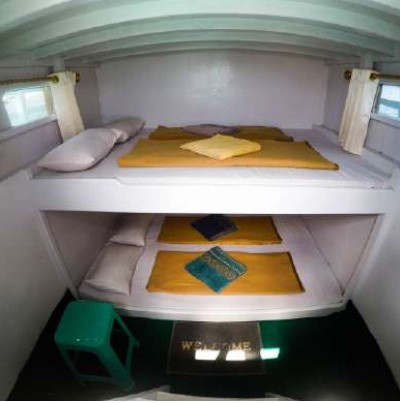
| Lower (Tide, Lagoon 1, Lagoon 2) | Least — nearest the waterline and hull centre | Most during the overnight run | Anyone prone to motion sickness |
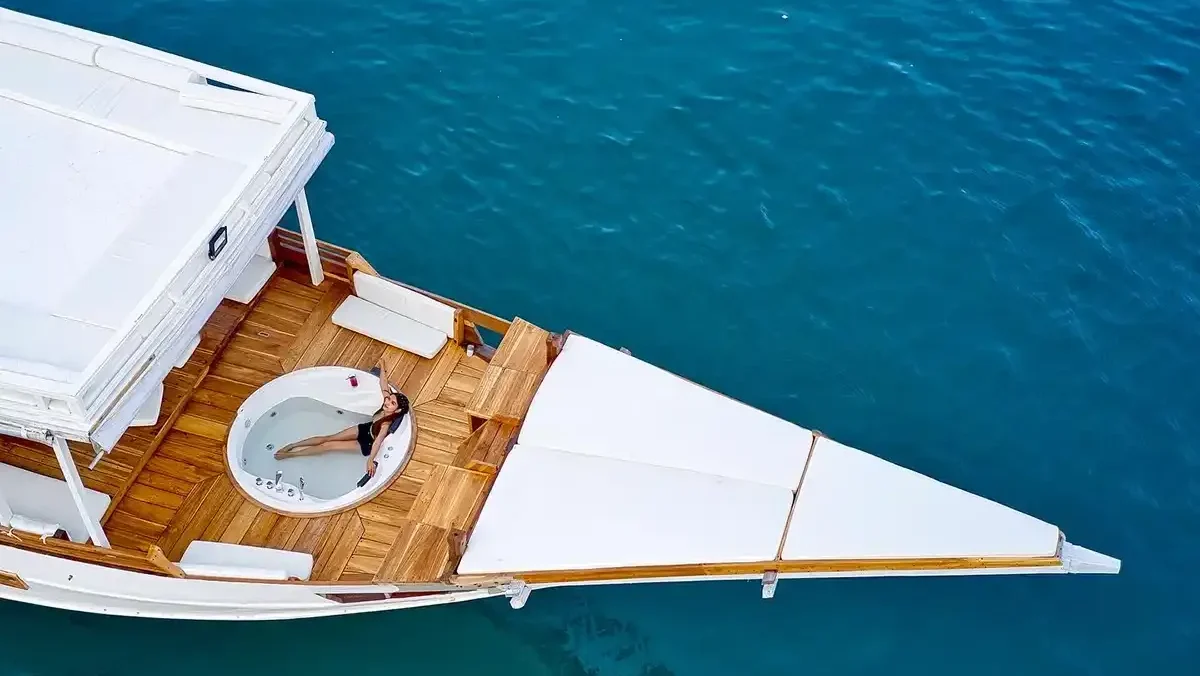
There is a real trade-off here and it is worth deciding deliberately. If you have ever been ill on a ferry, take the lower deck and accept the engine. If you sleep badly with noise but travel well on boats, take the upper deck. The full deck plan is on the vessel specifications and deck plan page.
Timing, which matters more than the product
Oral preventatives generally need one to two hours to take effect and are far less effective once nausea has begun. The practical rule on a Komodo cruise: take it with dinner on night one, before the overnight Padar run, rather than waking at 02:00 already unwell and taking it then.
Which product to use is a medical question, not a travel one. Some cause drowsiness — relevant when your wake-up is 04:26 and you are about to climb a ridge in the dark. Some interact with alcohol. Ask a pharmacist or your doctor before the trip rather than a stranger on a boat.
Season changes the odds
| Window | Sea state | What it means on board | Rate band |
|---|---|---|---|
| April–June | Calmest water of the year, best visibility | Shortest crossings, highest chance of reaching every stop | Shoulder |
| July–August | Good visibility, windy in open straits and around Padar | Swell on the Padar run; deck dining may move indoors | Peak — book 3–6 months ahead |
| September–November | Calm again, excellent visibility | The quietest premium window; best conditions-to-price ratio | Shoulder |
| December–March | Monsoon, roughest sea, some vessels in maintenance | Higher chance of itinerary changes; peak manta density | Low — manta season, not “bad” season |
If you have a genuine choice of month and a genuine susceptibility, April–June and September–November are the calmest water of the year. July–August is peak season and windy in the open straits — the crowd and the chop arrive together. December–March is the roughest, and it is also the peak manta window, which is the trade divers accept.
What the boat does for you
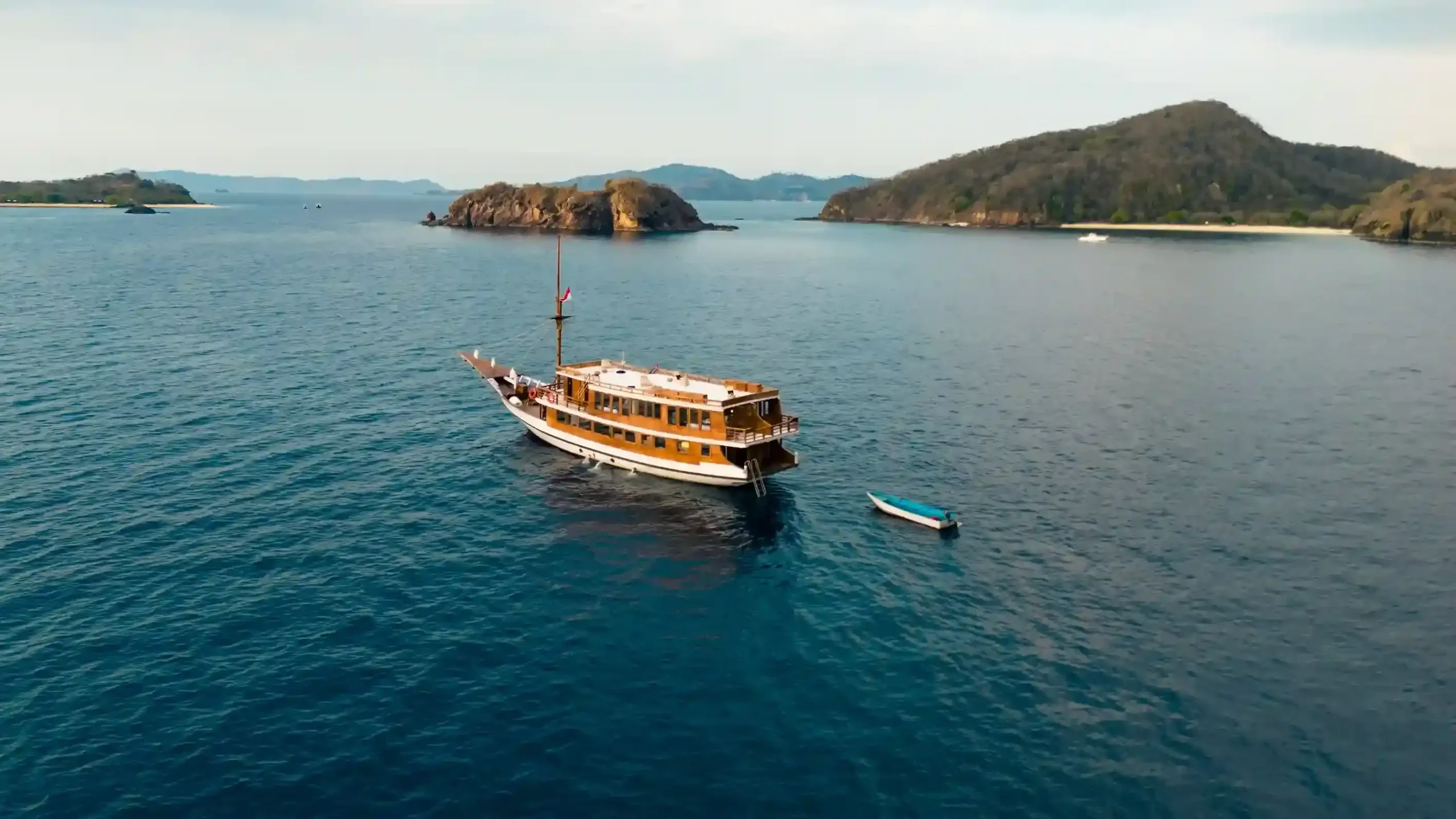
Mass is the main defence. Naturalia is 33.45 metres, 6 metres of beam and 161 gross tonnes — a heavy, beamy hull rather than a light sailing one, cruising at 7–9 knots. It rides through chop that throws smaller boats around. It does not make swell disappear, and any operator claiming otherwise is not being straight with you.
The crew also has room to help: the amidships deck is the steadiest open space on the boat, and there is always somewhere flat to sit at the centre of the hull. Say something early — crews on this route handle it weekly and would much rather move you at the first sign than deal with it at hour three.
What to do on the night, in order
- Eat dinner. An empty stomach is worse than a full one. Plain and moderate, not rich and large.
- Take the tablet with the meal. One to two hours before the passage begins.
- Lay out the morning kit. Headtorch, shoes, layer. Rummaging in the dark while moving is a reliable trigger.
- Sleep lying down, head toward the centreline if you can. Lying flat is genuinely effective; sitting up scrolling a phone in a moving cabin is the worst combination available.
- If you wake up unwell, go up rather than down. Air, horizon, amidships, water. Not the cabin, not the phone.
Do this and the overnight run is normally a non-event. Skip the timing and it is the story you tell about the trip. If you want the full picture of what each night on board is like, including where the boat anchors and how quiet it is, that is in where a Komodo cruise anchors at night.
Frequently asked questions
Do you get seasick on a Komodo cruise?
Most guests do not, because most legs are short and sheltered. The exception is the overnight run from Kalong to Padar — three to four hours through open water — and the exposed southern coast on longer itineraries. Those two passages are where seasickness happens.
Which cabin is best if you get seasick?
The lower deck. Tide, Lagoon 1 and Lagoon 2 sit closest to the waterline and the centre of the hull, which is where motion is least. Upper-deck cabins have the better view and the most movement. Lower deck is quieter for motion and louder for engine noise.
When should you take a seasickness tablet?
With dinner on the night before the Padar run, not when you start to feel unwell. Most oral preventatives need one to two hours to take effect and work far less well once nausea has started. Consult a pharmacist or doctor about which product suits you.
Which months are roughest in Komodo?
December to March is the monsoon and the roughest sea of the year. July and August are windy in the open straits and around Padar despite being peak season. April to June and September to November are the calmest windows.
Does a bigger boat reduce seasickness?
Generally yes. Mass and beam resist chop — a 161-gross-tonne, 6-metre-beam phinisi moves less than a light hull in the same water. It does not eliminate motion in swell, and no boat in Komodo does.
What helps once you already feel unwell?
Get on deck amidships, look at the horizon, get air, sip water, and eat something dry and plain. Do not go below to lie down in a cabin with a phone. Tell the crew — they deal with this every week and will move you to the best spot on the boat.
Booking & enquiries
Naturalia Cruise is operated and marketed by Komodo Luxury (part of Juara Holding Group, working out of Labuan Bajo since 2015). Cabin availability, charter dates and written quotations go through the Komodo Luxury reservations desk: WhatsApp +62 811 3823 875 or sales@komodoluxury.com. Payment terms are published and unchanged: 50% deposit to hold the date, balance due 30 days before departure, full payment if you book inside 30 days, deposit non-refundable on cancellation.
Rates and tariffs on this page were last reviewed on 1 August 2026 and are quoted for the 2027 season. Vessel figures are the operator’s published specifications; national park tariffs are from PP No. 36 Tahun 2024. Always confirm the current rate in writing before transferring a deposit.