On this page
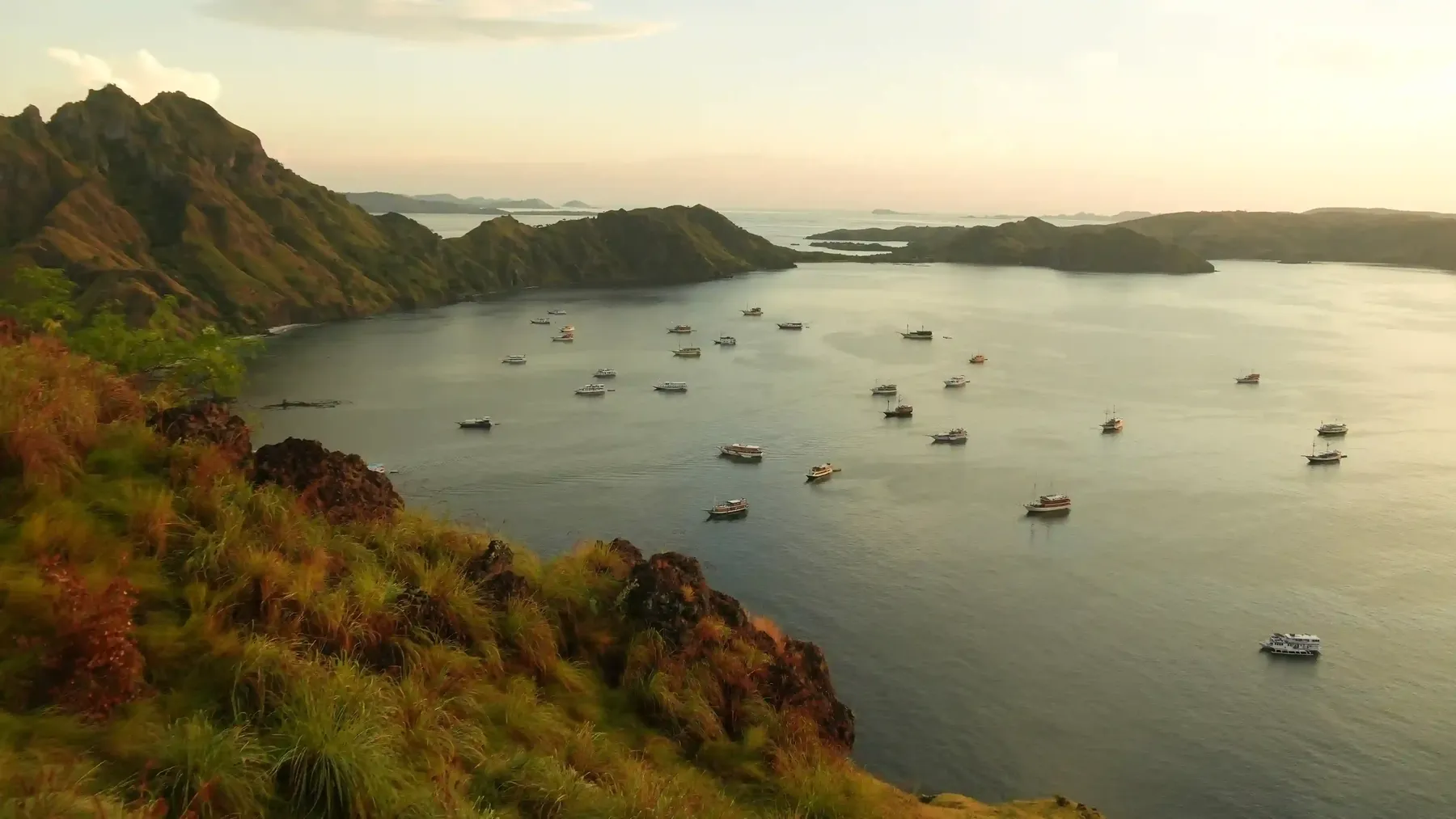
Naturalia works the Komodo archipelago in short legs: most anchorage-to-anchorage runs take 20 minutes to 1.5 hours at a 7–9 knot cruising speed, with one overnight run of three to four hours from Kalong toward Padar. Total daylight sailing is roughly four to six hours on a full day.
The route as a text map
No operator in Komodo publishes a distance chart, which means travellers plan multi-day itineraries without knowing how much of the day is spent moving. Here is the map written out, from the harbour outward.
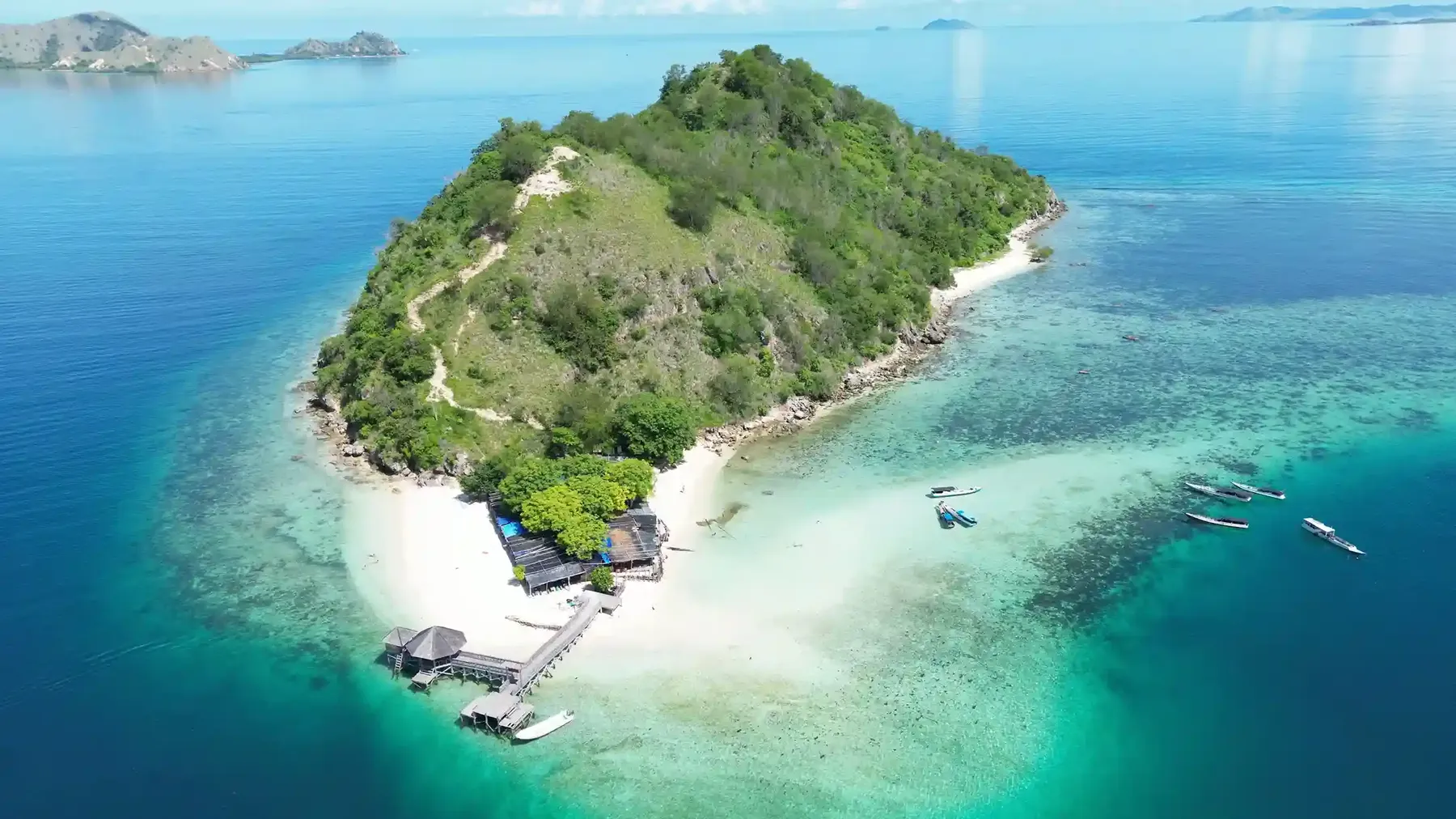
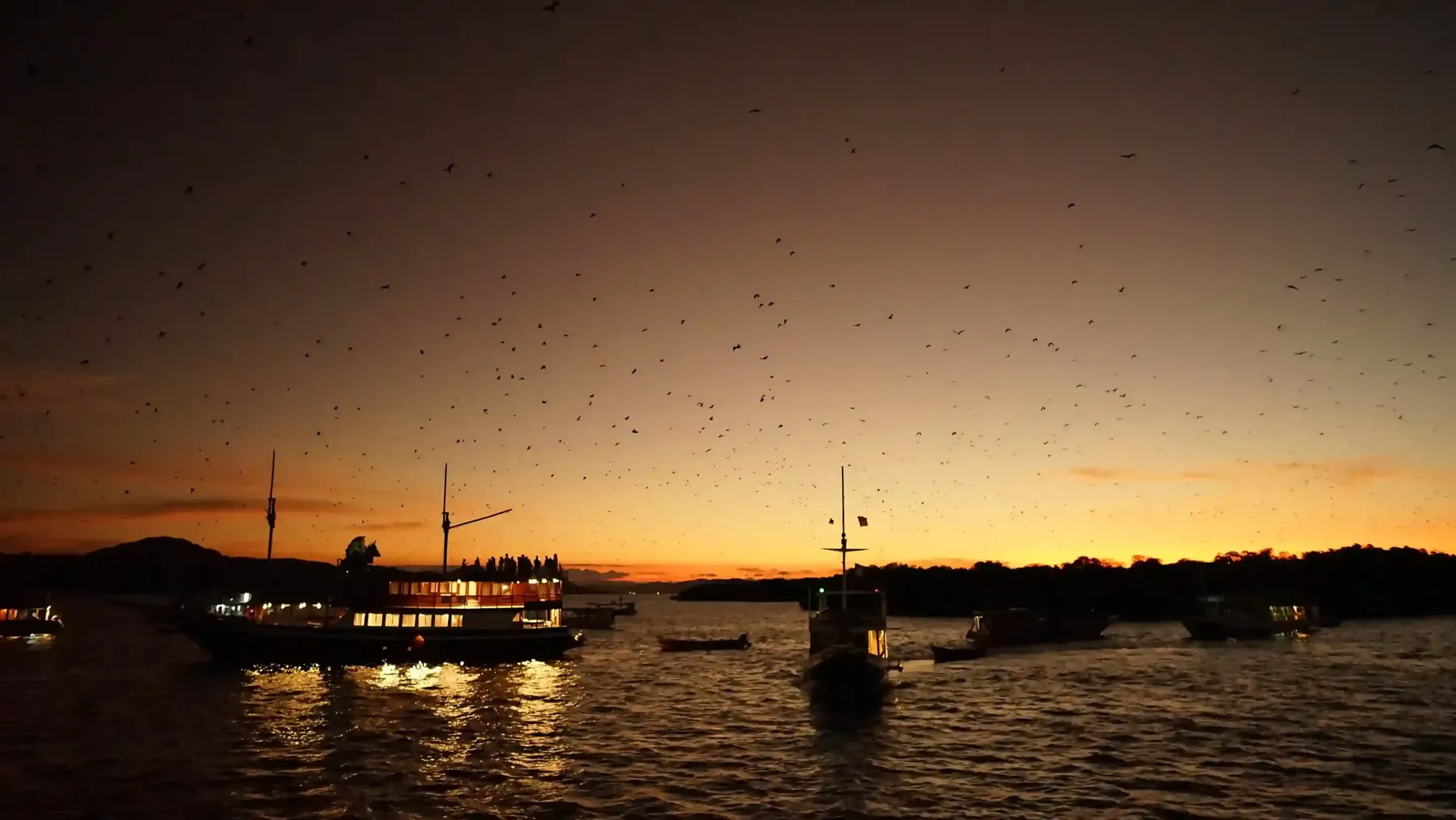
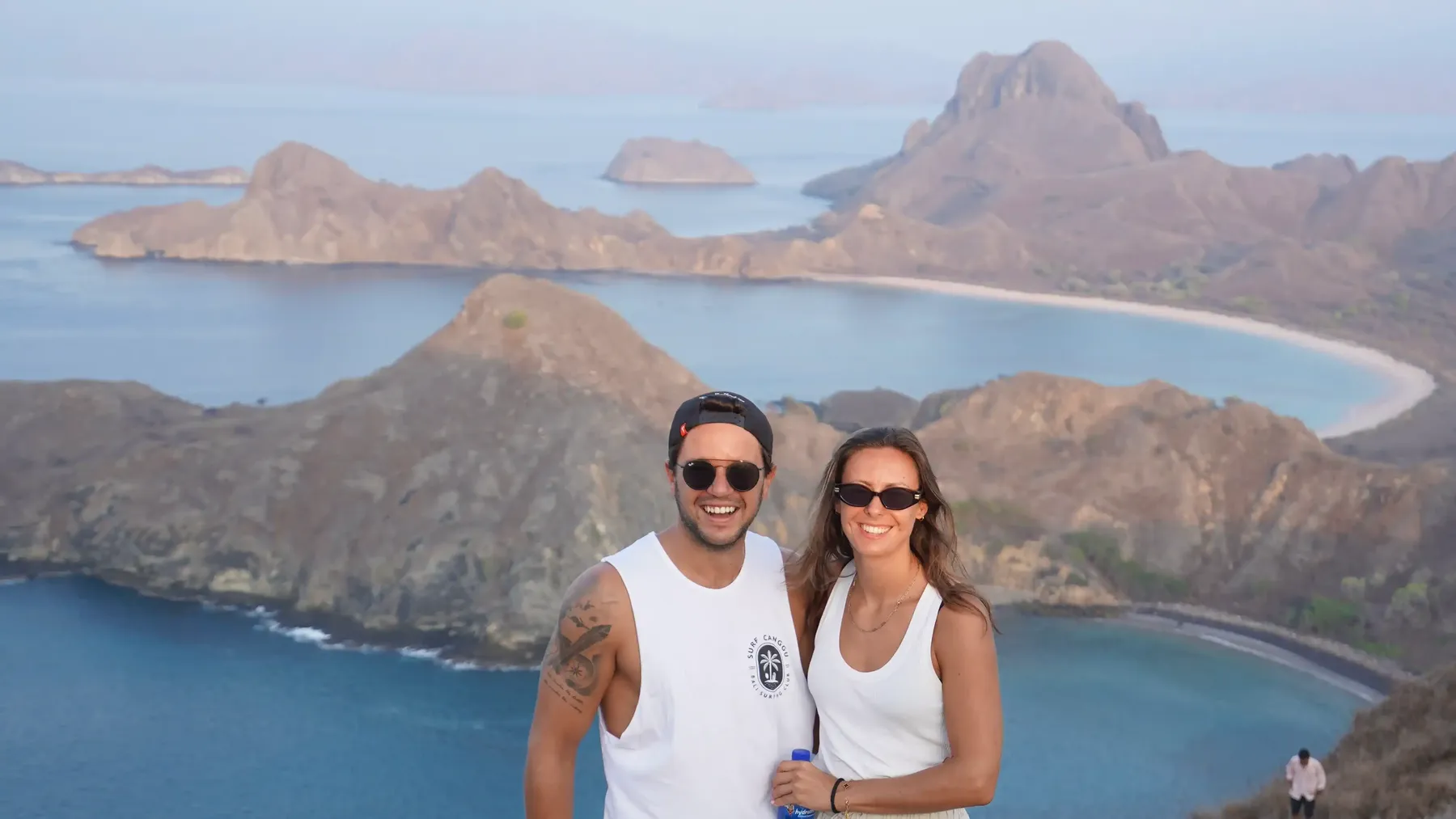
Labuan Bajo → about 1 hour → Kelor (short summit trek, sheltered snorkel) → 0.5–1 hour → Manjarite (calm snorkel bay) → about 1 hour → Kalong (dusk flying-fox exodus, night anchorage) → 3–4 hours overnight → Padar (pre-dawn ridge climb) → 1–1.5 hours → Pink Beach (coral-tinted sand, shallow reef) → 0.5–1 hour → Komodo Island (ranger-led trek at Loh Liang) → 0.5–1 hour → Manta Point / Karang Makassar (drift, mantas) → 20–30 minutes → Taka Makassar (tidal sandbar) → 1–1.5 hours → Siaba Besar (turtles, sheltered night anchorage) → 1–1.5 hours → Kanawa (final reef) → about 1–1.5 hours → Labuan Bajo.
Naturalia’s own published 3D2N sequence compresses that loop and runs it in a different order — Sebayur, Manta Point and Taka Makassar on day one; Padar, Pink Beach and Komodo on day two; Kelor and Manjarite on day three — because it positions the boat differently on the first night. Both shapes cover the same water.
Leg-by-leg sailing times
| Leg | Typical sailing time | Confidence |
|---|---|---|
| Labuan Bajo → Kelor | about 1 hour | Verified across operators |
| Labuan Bajo → Kanawa | about 1–1.5 hours | Operational range |
| Labuan Bajo → Sebayur | about 1.5–2 hours | Operational range |
| Kelor → Manjarite | about 0.5–1 hour | Operational range |
| Manjarite → Kalong | about 1 hour | Operational range |
| Kalong → Padar (overnight run) | about 3–4 hours | Operational range |
| Padar → Pink Beach | about 1–1.5 hours | Operational range |
| Pink Beach → Komodo Island | about 0.5–1 hour | Operational range |
| Komodo → Manta Point (Karang Makassar) | about 0.5–1 hour | Operational range |
| Manta Point → Taka Makassar | about 20–30 minutes | Operational range |
| Taka Makassar → Siaba Besar | about 1–1.5 hours | Operational range |
| Siaba Besar → Kanawa | about 1–1.5 hours | Operational range |
| Rinca → Kalong | about 0.5–1 hour | Operational range |
Only the first line of that table is firmly documented across sources; the rest are the operational ranges crews actually work to. We publish them as ranges deliberately. The straits here funnel serious tidal current, and the same leg can differ by 40 minutes depending on whether you are running with the tide or against it. A page that gives you a single precise number for each leg is guessing.
How the hull affects the numbers
| Specification | Naturalia Cruise |
|---|---|
| Type | Wooden traditional phinisi, hand-built in Bulukumba, South Sulawesi |
| Length overall (LOA) | 33.45 m |
| Beam | 6 m |
| Gross tonnage | 161 GT |
| Decks | 3 (upper, main, lower) |
| Cabins | 8, all air-conditioned, all en-suite with hot water |
| Maximum guests | 24 |
| Main engine | Mitsubishi 6D22, 200 HP, 2,200 RPM |
| Cruising speed | 7–9 knots |
| Generators | Main 31.3 kVA + backup 31.3 kVA |
| Fuel capacity | 4,000 litres |
| Fresh water capacity | 8,000 litres |
| Safety equipment | Life raft, life buoys, fibreglass tender |
| Home port | Labuan Bajo, Flores (Komodo Airport code LBJ) |
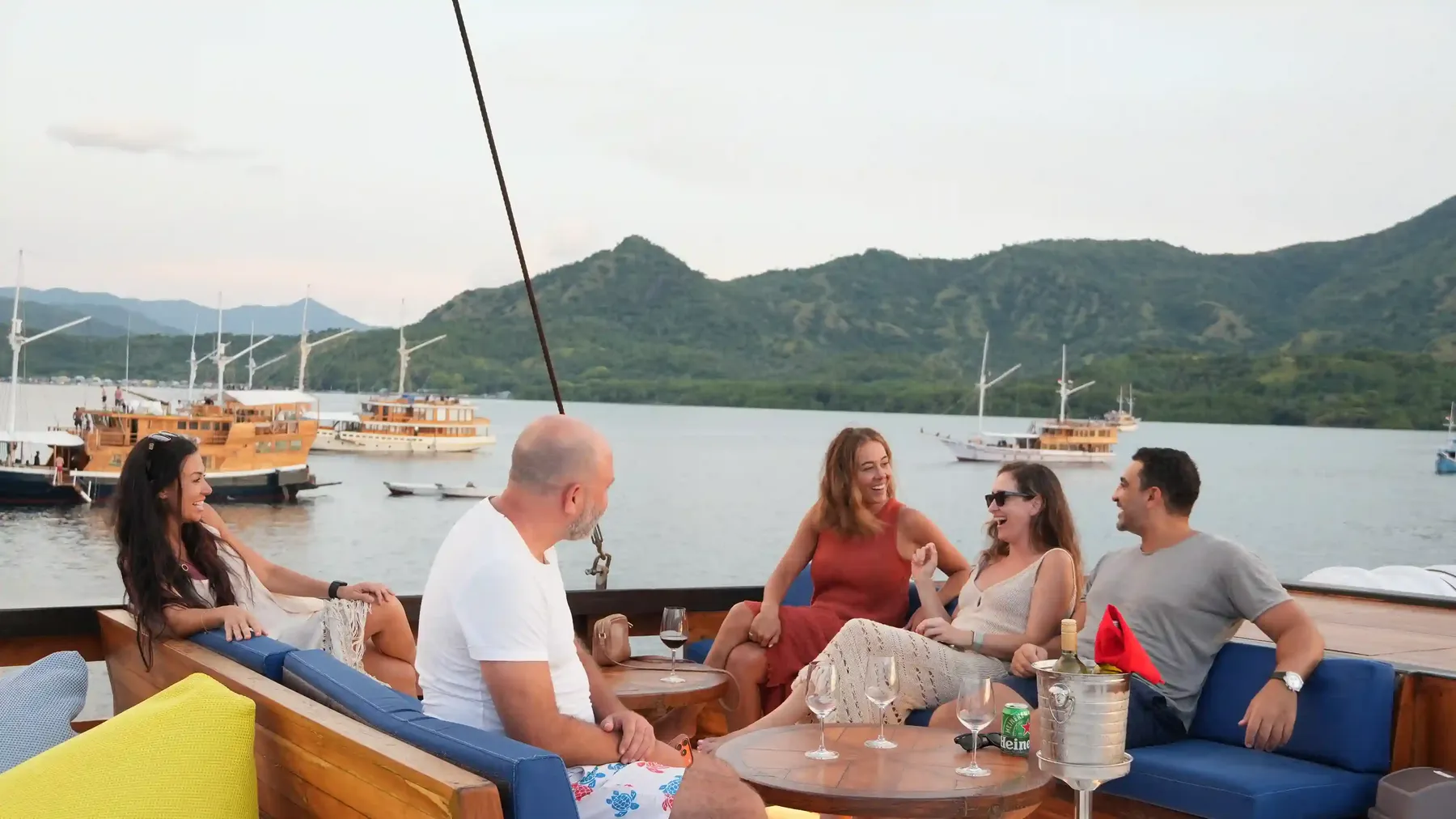
Two specifications drive everything above. The Mitsubishi 6D22 at 200 HP gives a 7–9 knot cruise, which is a working phinisi speed rather than a yacht speed. And 161 gross tonnes on a 33.45 m hull means the boat carries momentum through chop rather than slamming, so the ride quality on the exposed legs is better than the speed suggests. Light day boats are faster and considerably less comfortable on the same water.
The west monsoon alternative
From December to March the prevailing wind swings west and north-west, and the standard loop stops working in its published order. Crews respond in three ways. They favour anchorages sheltered from the west, which usually means more time in the Siaba and Sebayur area and less in exposed water. They reverse the direction of the loop so the longest exposed leg is run with the weather rather than into it. And they drop tidal stops such as Taka Makassar when the tide table and swell do not align.
| Window | Sea state | What it means on board | Rate band |
|---|---|---|---|
| April–June | Calmest water of the year, best visibility | Shortest crossings, highest chance of every stop being reached | Shoulder |
| July–August | Good visibility, windy in the open straits and around Padar | Some swell on the Padar run; deck dining may move indoors | Peak — book 3–6 months ahead |
| September–November | Calm again, excellent visibility | The quietest premium window; best value-to-conditions ratio | Shoulder |
| December–March | Monsoon, roughest sea, some vessels in maintenance | Higher chance of itinerary changes; peak manta density | Low — manta season, not “bad” season |
What almost never gets dropped is Padar, Komodo Island and Manta Point — those are reachable in most conditions the boat will sail in at all. What changes is the order and the timing.
Getting to the start line
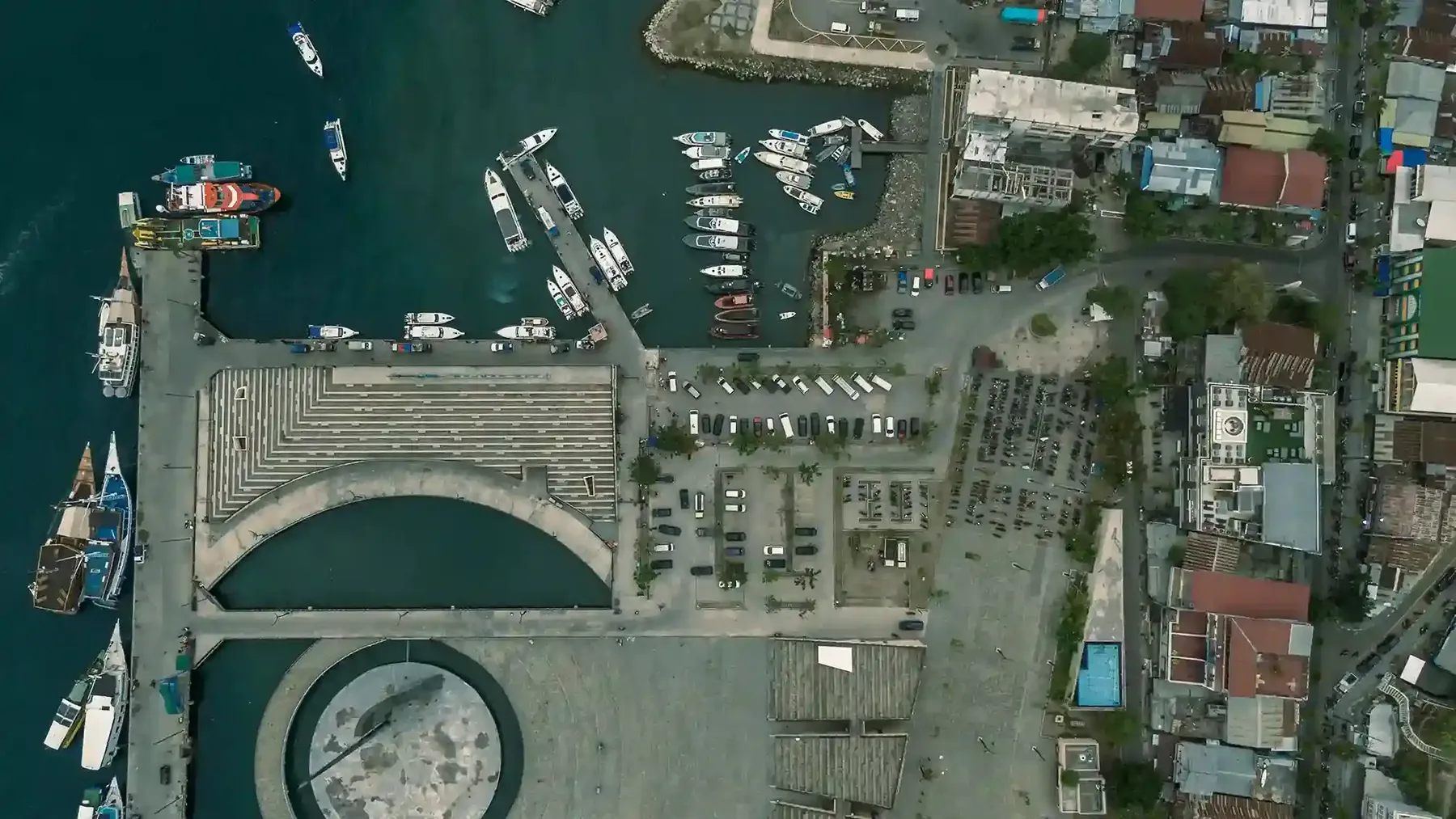
Every itinerary begins and ends at Labuan Bajo harbour, with hotel or airport transfers included on the mainland. Komodo Airport (LBJ) is served by Garuda Indonesia, Batik Air, Citilink and the Lion Air group, with frequencies that shift seasonally. Denpasar to Labuan Bajo is roughly 1 to 1.5 hours non-stop; Jakarta is roughly 2 to 2.5 hours. Arrive the day before your departure rather than on the morning of it — a delayed Bali flight is the single most common reason people miss a boarding.
Best for
Best for: planners who want to know how much of the trip is spent moving before they commit; anyone comparing a 3D2N against a 4D3N and trying to work out what the extra day buys; travellers prone to seasickness who want to know where the long legs sit. Less useful if: you want a guaranteed minute-by-minute timetable, which no honest operator in these waters will give you. Full route options across the wider fleet are listed at komodotrip.com.
Frequently asked questions
How many hours does a Komodo cruise spend sailing?
About four to six hours a day on a full day, broken into legs of 20 minutes to 1.5 hours, plus one longer overnight run of roughly three to four hours from the Kalong anchorage toward Padar. Nothing is done as a single long daylight crossing.
How far is Komodo Island from Labuan Bajo by boat?
There is no published distance chart, but a 33.45 m phinisi cruising at 7-9 knots typically works the harbour-to-Komodo corridor in stages: about an hour to Kelor, another half hour to an hour to Manjarite, an hour to Kalong, then three to four hours overnight to the Padar area, and half an hour to an hour more to Komodo Island.
Why do sailing times vary so much?
Tide and wind. The straits between the islands funnel strong tidal currents, so the same leg can take 40 minutes with the tide and 80 minutes against it. That is why we publish ranges rather than a timetable – a fixed schedule in these waters is a fiction.
What is the longest single leg?
The Kalong to Padar run at roughly three to four hours. It is deliberately scheduled overnight or pre-dawn so that guests sleep through it and arrive in position for the sunrise climb.
Does the route change in the west monsoon?
Yes. From December to March the crew will favour anchorages sheltered from the west and north-west, may reverse the direction of the loop and will drop exposed stops such as Taka Makassar when the tide and swell do not work together. The headline sites usually stay in; the order changes.
How fast does Naturalia cruise?
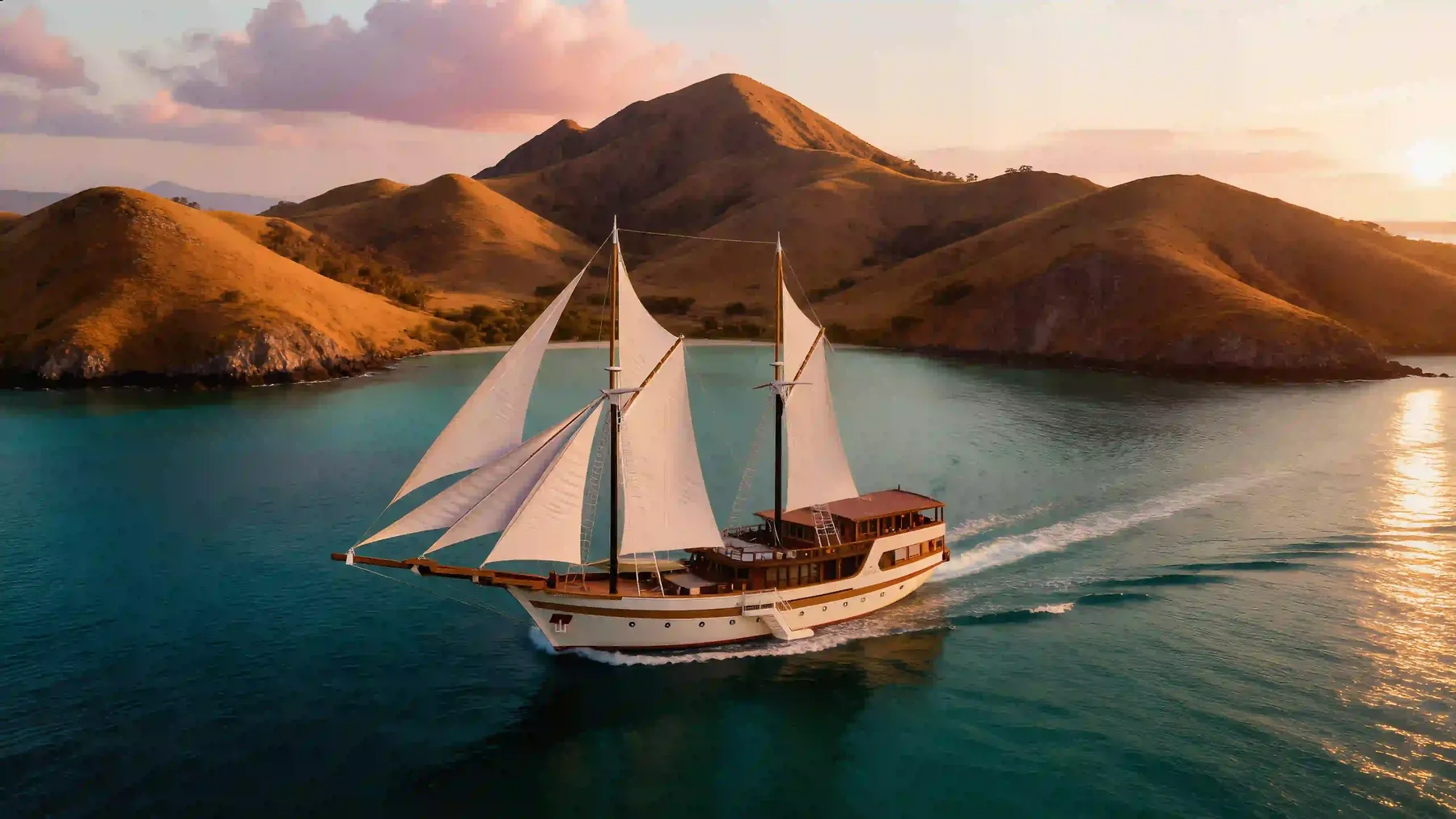
Seven to nine knots, driven by a single Mitsubishi 6D22 producing 200 HP at 2,200 RPM. That is a working phinisi speed – it is a 161-tonne wooden hull, not a fast motor yacht.
Can we sail at night?
The boat repositions at night on the Kalong to Padar leg. Otherwise the pattern is to anchor overnight in a sheltered bay. Night passages beyond the scheduled repositioning are at the captain’s discretion and are avoided in poor visibility.
Where does the trip start and end?
Labuan Bajo harbour on Flores, with transfers included from your Labuan Bajo hotel or from Komodo Airport (LBJ). Denpasar to Labuan Bajo is roughly a 1 to 1.5 hour flight; Jakarta is roughly 2 to 2.5 hours.
Booking & enquiries
Route sequencing is confirmed with you before departure and reconfirmed on the day against the tide table. Naturalia Cruise is operated and marketed by Komodo Luxury (part of Juara Holding Group, working in Labuan Bajo since 2015). Reservations, cabin availability and written quotations go through the Komodo Luxury reservations desk: WhatsApp +628113823875 or sales@komodoluxury.com. Payment terms are published and unchanged: 50% deposit to hold the date, balance due 30 days before departure, full payment if you book inside 30 days. The deposit is non-refundable on cancellation.
Where these numbers come from
Vessel dimensions, cabin layout, engine and generator data, charter tiers and cabin rates on this page are the figures published by the operator, Komodo Luxury, on its Naturalia charter listing. National park tariffs are taken from PP No. 36 Tahun 2024 as socialised by Balai Taman Nasional Komodo. Sunrise and sunset times are computed for Padar Island (8°39′S, 119°35′E) in WITA (UTC+8) and are accurate to about three minutes. Sailing times between anchorages are operational ranges, not fixed schedules — they move with tide, wind and ranger queues, and we write them as ranges for that reason. Rates are quoted for the 2027 season and were last reviewed on 1 August 2026; always confirm the current rate in writing before transferring a deposit.