On this page
You do not need a tank, a certification card, or a dive boat’s timetable to spend most of a Komodo trip in the water. Aboard Naturalia Cruise, snorkeling is stitched into every leg of our 3D2N and 4D3N South Komodo itineraries — the bay below Padar’s ridgeline after the dawn trek, the reef shelf off Pink Beach before lunch, a slack-water drift, and a quiet evening anchorage for one last swim before dinner. Masks, snorkels and fins live on board; certified divers can have tank dives folded into the route through licensed Labuan Bajo dive operators. This guide covers where the ship puts you in the water, what gear to expect, how the crew reads Komodo’s currents, and what a day actually feels like on a 33.45-metre wooden phinisi carrying no more than 24 guests.
Last updated: August 16, 2026
A cruise that snorkels — and says so plainly
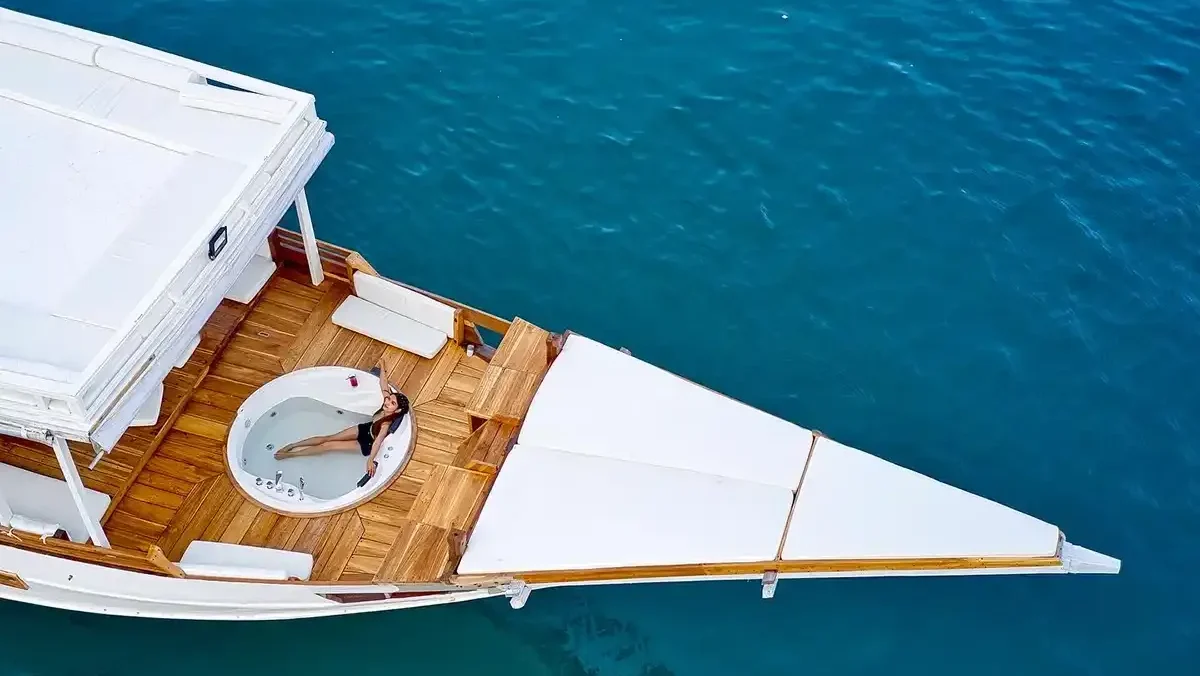
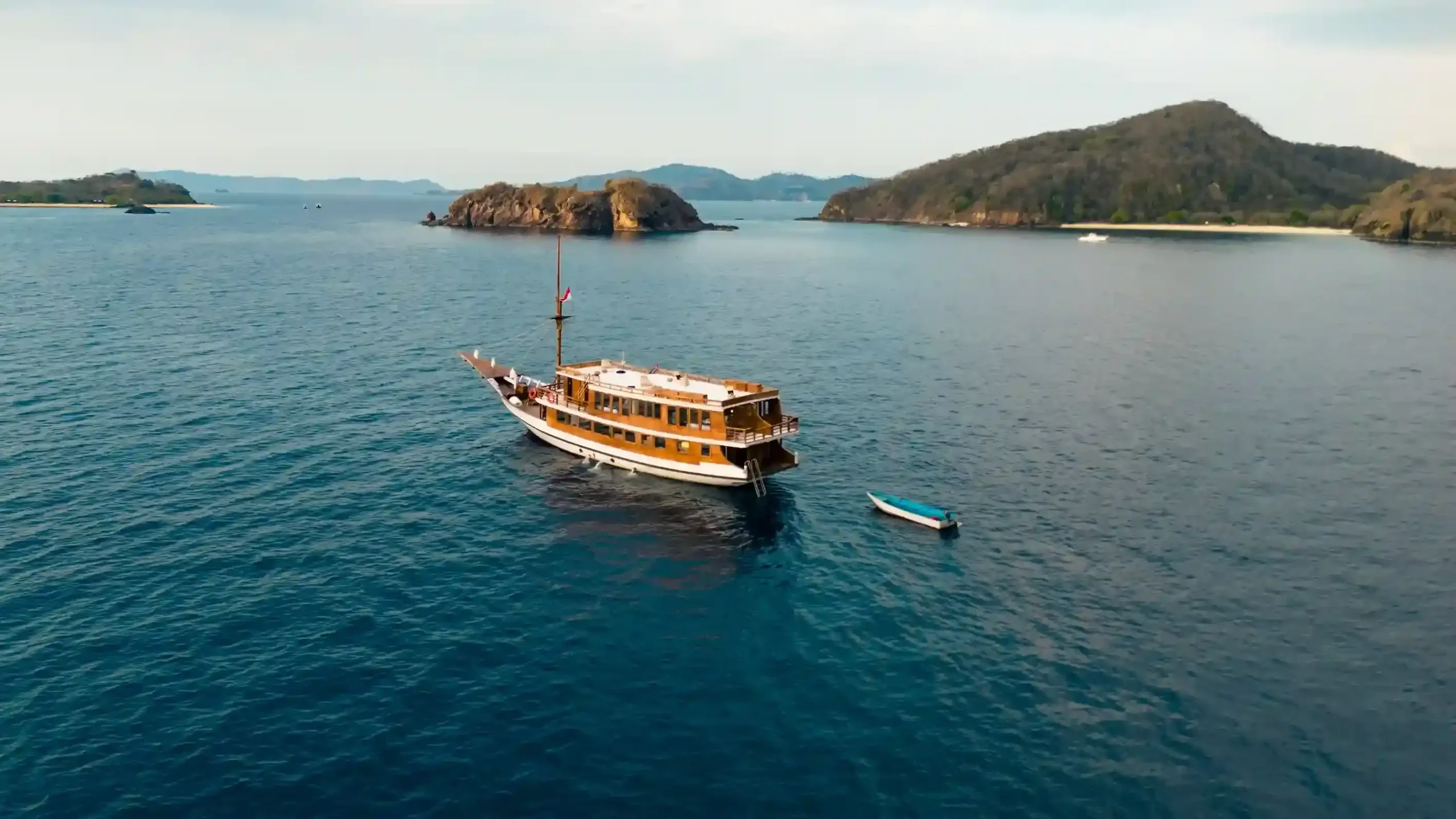
Words get loose in Labuan Bajo, so we use them precisely. A phinisi is a wooden ship built in the Bulukumba tradition of South Sulawesi; Naturalia is one, 33.45 metres and 161 gross tonnes of it. A liveaboard is a vessel organised around multi-day diving — compressors, tank racks, four submersions a day. A cruise is organised around comfort: eight en-suite cabins, proper meals, shaded deck space, and a route that makes sense above the waterline as well as below it. Naturalia is a cruise with a serious snorkel program, not a dive platform with beds bolted on.
That honesty cuts both ways. If your trip will be judged by dive count and bottom time, a dedicated dive vessel serves you better, and our survey of the wider Labuan Bajo liveaboard scene is a fair place to start comparing. But if you want to climb Padar at first light, eat well, sleep in a real bed, and still spend two or three sessions a day face-down over living coral, this is exactly the format built for it.
The sites: where the ship puts you in the water
Padar’s saddle bays
The famous trek happens at dawn, before the heat. What most day visitors never learn is that the bays below the ridgeline hold clean, shallow reef over pale sand — and by the time you descend, the tender is already waiting. Early, low-angle light makes it the most forgiving snorkel of the trip — calm, clear, shallow.
Pink Beach
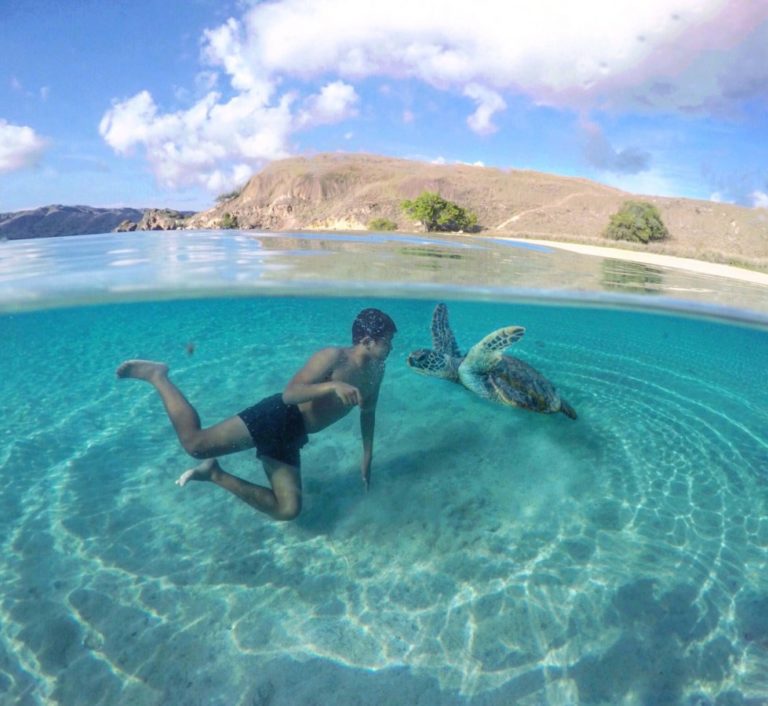
The blush in the sand comes from fragments of red organ-pipe coral and pigmented foraminifera ground fine by the surf. A few fin-kicks off the beach, the shelf steps down from two metres to around ten, and the fish life thickens: parrotfish working the coral, moorish idols in pairs, the occasional turtle lifting off the bottom.
The southern arc
Our South Komodo routing follows channels where tidal current feeds plankton to the reef. When tide and season align, the crew positions the tenders for a gentle drift over shallows where mantas are known to cruise. Conditions decide, not the brochure; when the water says no, there is always another bay.
Evening stops
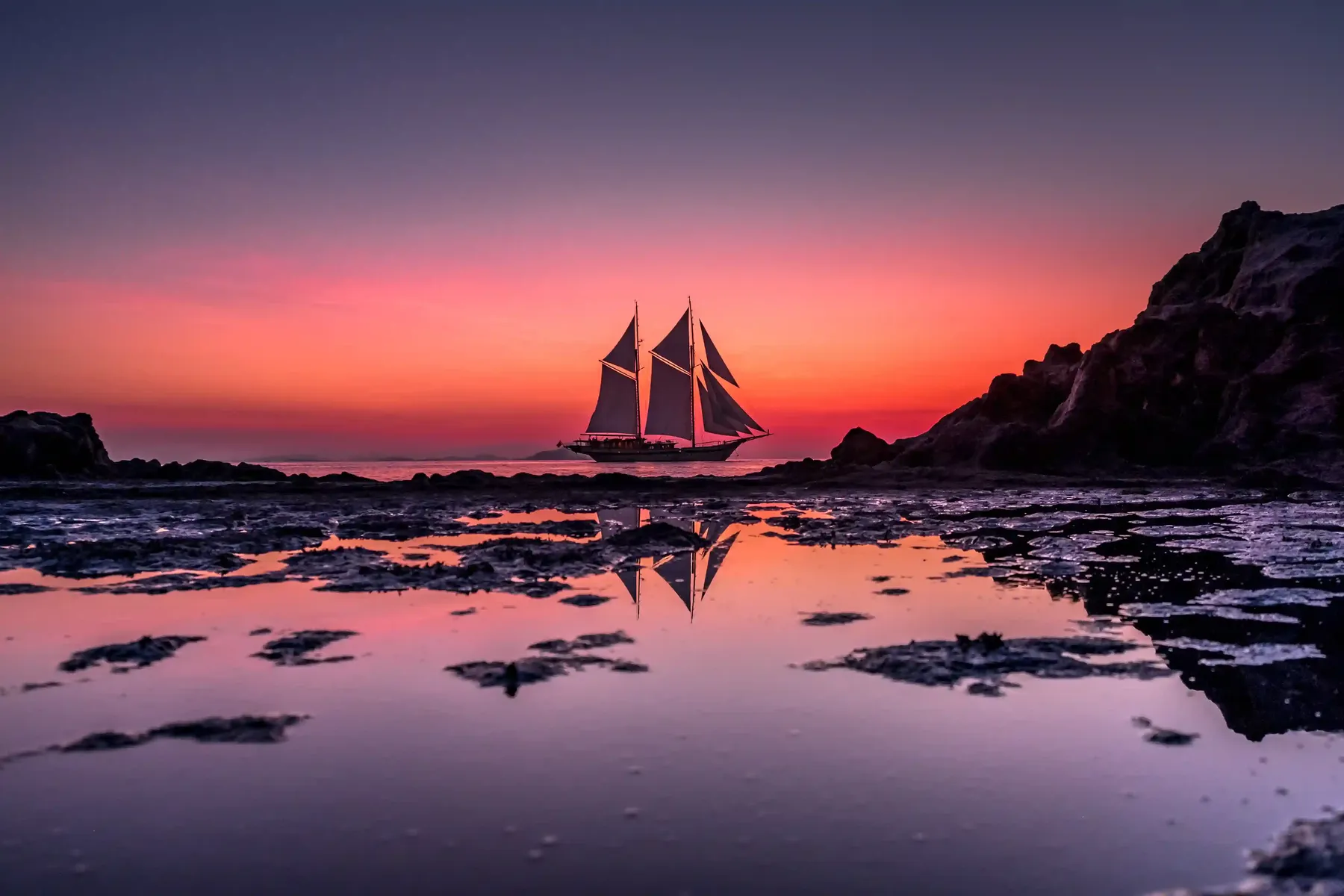
We anchor before sunset in wind-sheltered water. The last swim of the day happens in flat, gold-lit sea off the stern, and on certain legs fruit bats cross the masthead at dusk, leaving the mangroves.
Gear: what lives aboard, what to bring
The ship carries masks, snorkels and fins in a range of adult sizes, plus buoyancy vests and rinse tubs so salt never dries into the silicone. What is worth packing yourself: a prescription mask if you wear one, a rash guard for sun rather than cold, and reef-safe sunscreen — the park’s coral does not negotiate. Certified divers arranging tank dives should bring their certification card and, ideally, their own computer; a thin wetsuit earns its space in the bag for southern sites between July and September, when cooler water pushes up from the deep.
The rhythm of a day on board
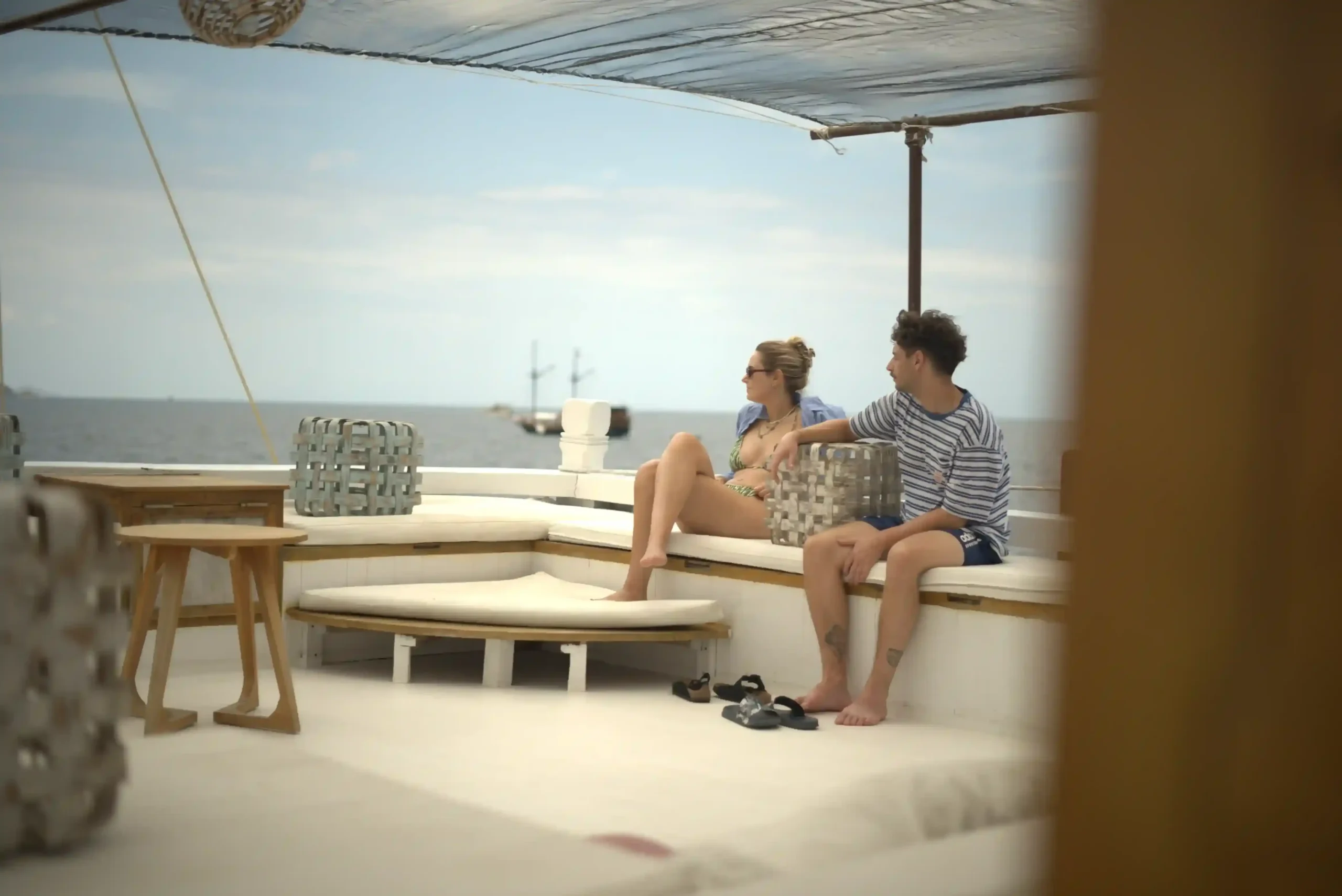
Take a middle day of the 4D3N route. The wake-up knock comes early and the tender runs trekkers ashore for Padar before the sun does its worst. Breakfast is served as the anchor comes up. Mid-morning, the first snorkel session — usually the day’s best visibility. Lunch happens on passage. Mid-afternoon, a second site with a different character: a drift where the morning was still, a turtle slope where the morning was fish. By late afternoon the ship is anchored for the evening stop, and the water is yours until the light goes. With no more than 24 guests across eight cabins, tender groups stay small — nobody snorkels in a crowd of their own shipmates.
Currents, the visitor cap, and the 15 August earthquake
Komodo’s richness is a product of current — tide squeezing between islands, carrying nutrients across every reef. The crew’s job is to make that engine work for you: entries are timed toward slack water, snorkelers are dropped up-current so the sea carries you back toward the tender, and a guide is in the water with every group. Vests are offered without ceremony; taking one is normal here, not a confession.
Two pieces of 2026 context are worth knowing. Since 1 April 2026, Komodo National Park has capped entries at 1,000 visitors per day. In practice this is good news for snorkelers: calmer sites, coordinated anchorages, quieter mornings. And on 15 August 2026, a magnitude 7.7 earthquake struck the region; the highest wave recorded was 0.36 metres — no destructive tsunami — and the park reopened the same day. Our crews re-ran anchorage and muster briefings that afternoon, and sailings continue on their normal pattern.
One cabin or the whole ship
Naturalia sails within the fleet of Komodo Luxury — a registered Indonesian PT under Juara Holding Group Limited with 1,500+ verified guest reviews (4.9/5) — and the two ways to board reflect how that fleet operates. An open trip books you a cabin on a shared departure: the 3D2N route runs USD 400–800 per person depending on cabin category. A charter takes the whole phinisi — all eight cabins, the route shaped around your group — with banded rates from USD 7,400 per night. If you are weighing a full-boat booking, the pricing-band explainer at Komodo Boat Charter lays out how vessel class changes the arithmetic. Travellers comparing hulls within the family often also look at Neptune Cruise, a sister vessel in the same fleet with its own layout and character, or at Yumana, a sister vessel with a different configuration.
Frequently asked questions
Do I need a diving certification to enjoy the water program?
No. Naturalia’s in-water program is snorkel-led and built for all levels, with guides in the water and vests available. Certified divers can request tank dives arranged through licensed Labuan Bajo dive operators and folded into the route.
Is snorkeling gear included on board?
Yes — masks, snorkels and fins in a range of adult sizes, plus buoyancy vests and rinse tubs. If you wear a prescription mask or have a favourite low-volume mask, bring it; fit you trust beats fit you borrow.
When is the water clearest for snorkeling in Komodo?
Most guests find the finest visibility in the dry months from roughly April to November. Southern sites run cooler from July to September, when a thin wetsuit is welcome; the trade-off is nutrient-rich water and busier reefs.
Are Komodo’s currents safe for beginner snorkelers?
With timing and supervision, yes. Entries are planned toward slack water, drops are made up-current of the tender, and a guide swims with every group. Strong-current sites are simply skipped for snorkelers when conditions call for it.
Did the 15 August 2026 earthquake affect trips?
The magnitude 7.7 quake produced a maximum recorded wave of 0.36 metres — no destructive tsunami — and Komodo National Park reopened the same day. Crews reviewed anchorages and safety briefings, and sailings continue normally.
How does the 1,000-visitor daily cap change the experience?
Since 1 April 2026 the park limits entries to 1,000 visitors per day. For snorkelers the effect is positive: calmer sites and mornings that feel far emptier than Komodo’s fame implies.
The honest summary: Komodo rewards time in the water, and a phinisi that treats snorkeling as the spine of the day — rather than an add-on between photo stops — gives you more of it, in better light, with fewer people. That is the whole design of Naturalia Cruise.
Frequently Asked Questions
Do I need a diving certification to enjoy the water program?
No. Naturalia’s in-water program is snorkel-led and built for all levels, with guides in the water and vests available. Certified divers can request tank dives arranged through licensed Labuan Bajo dive operators and folded into the route.
Is snorkeling gear included on board?
Yes — masks, snorkels and fins in a range of adult sizes, plus buoyancy vests and rinse tubs. If you wear a prescription mask or have a favourite low-volume mask, bring it; fit you trust beats fit you borrow.
When is the water clearest for snorkeling in Komodo?
Most guests find the finest visibility in the dry months from roughly April to November. Southern sites run cooler from July to September, when a thin wetsuit is welcome; the trade-off is nutrient-rich water and busier reefs.
Are Komodo's currents safe for beginner snorkelers?
With timing and supervision, yes. Entries are planned toward slack water, drops are made up-current of the tender, and a guide swims with every group. Strong-current sites are simply skipped for snorkelers when conditions call for it.
Did the 15 August 2026 earthquake affect trips?
The magnitude 7.7 quake produced a maximum recorded wave of 0.36 metres — no destructive tsunami — and Komodo National Park reopened the same day. Crews reviewed anchorages and safety briefings, and sailings continue normally.
How does the 1,000-visitor daily cap change the experience?
Since 1 April 2026 the park limits entries to 1,000 visitors per day. For snorkelers the effect is positive: calmer sites and mornings that feel far emptier than Komodo’s fame implies.