On this page
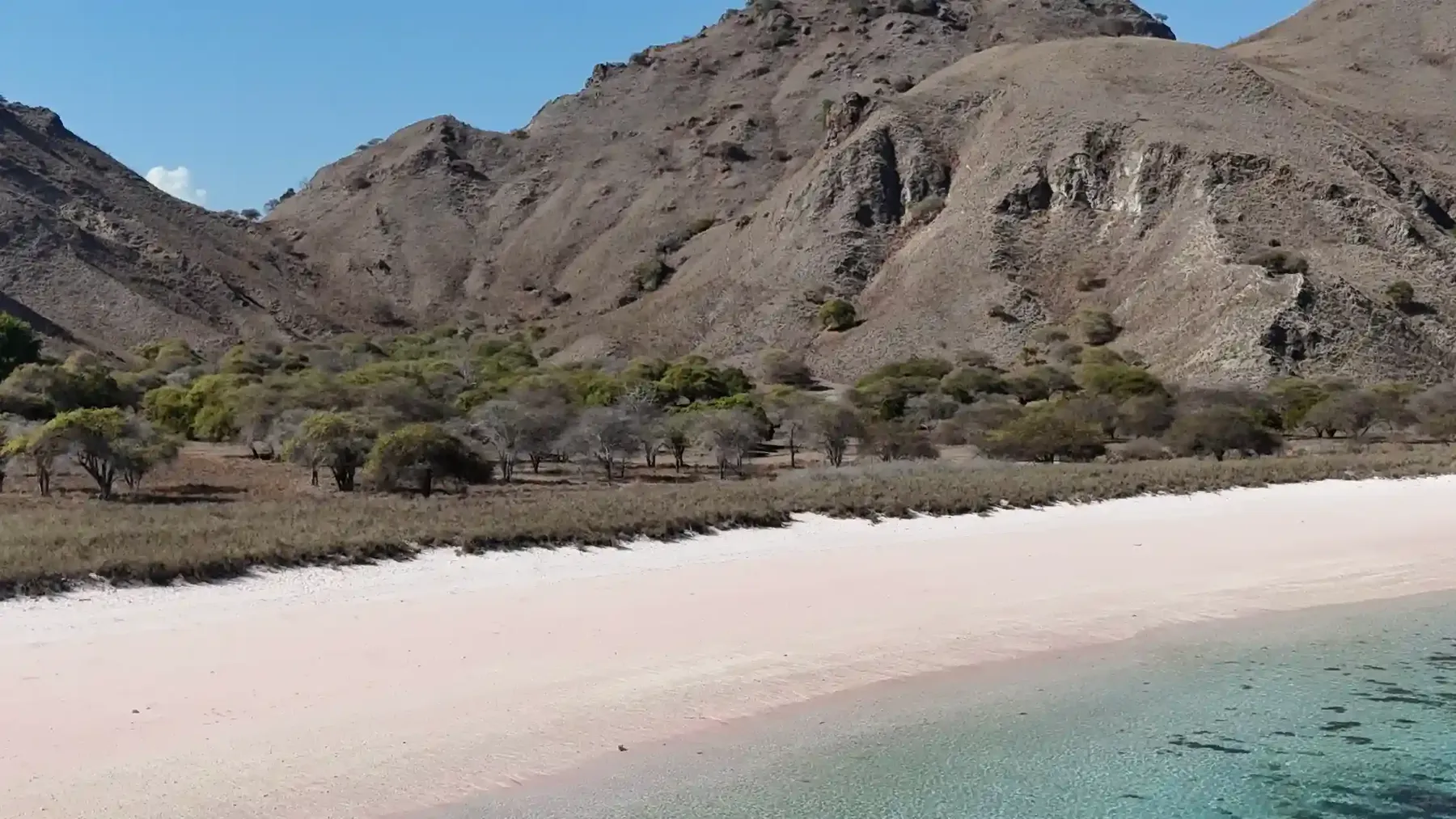
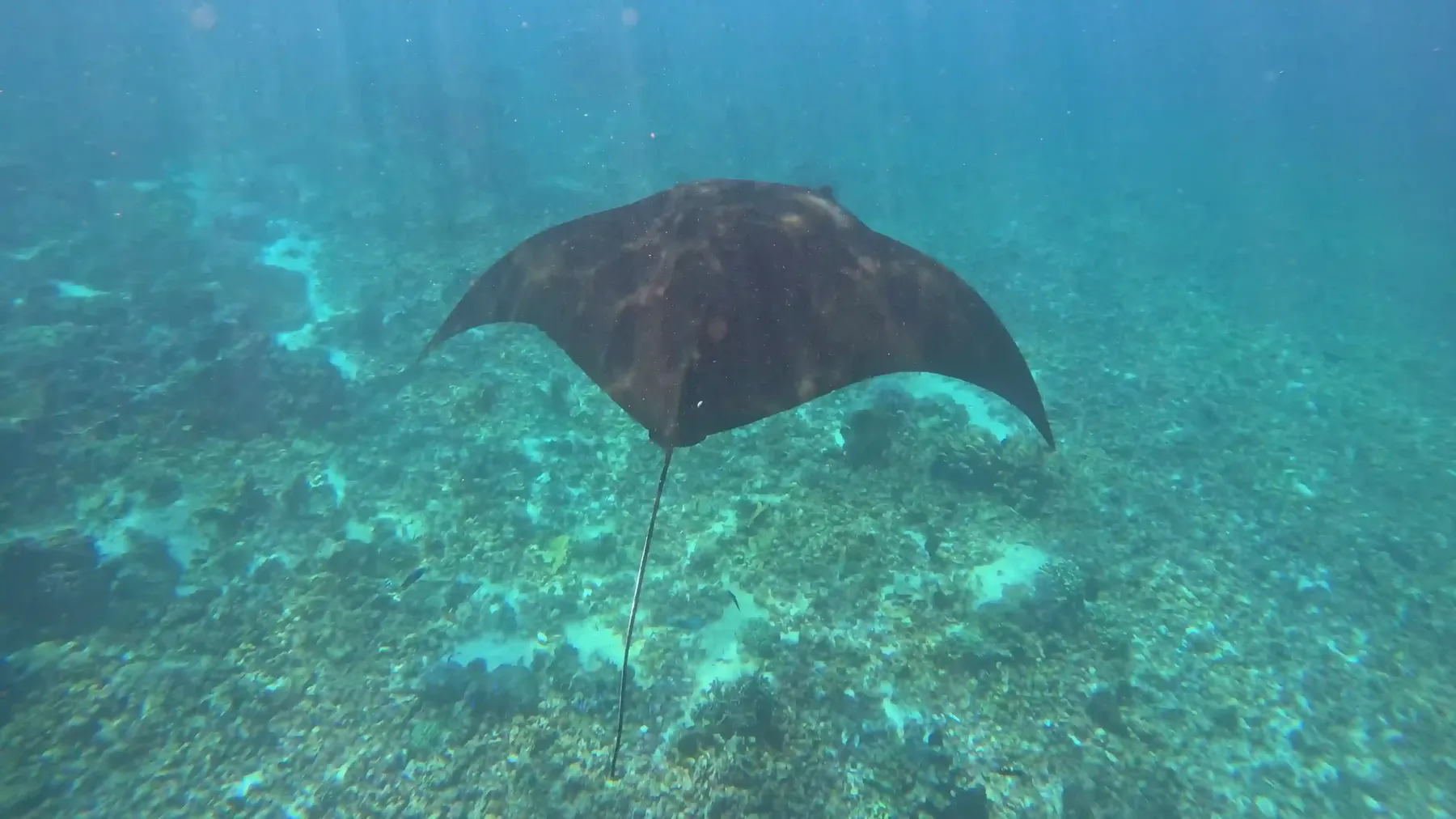
Pink Beach reads pale pink at the wet tideline and cream higher up — the colour comes from red organ-pipe coral fragments and is strongest in mid-morning light. Taka Makassar is a tidal sandbar that can be submerged at high water. Both sit beside Karang Makassar, where mantas are present year-round in 8–18 metres.
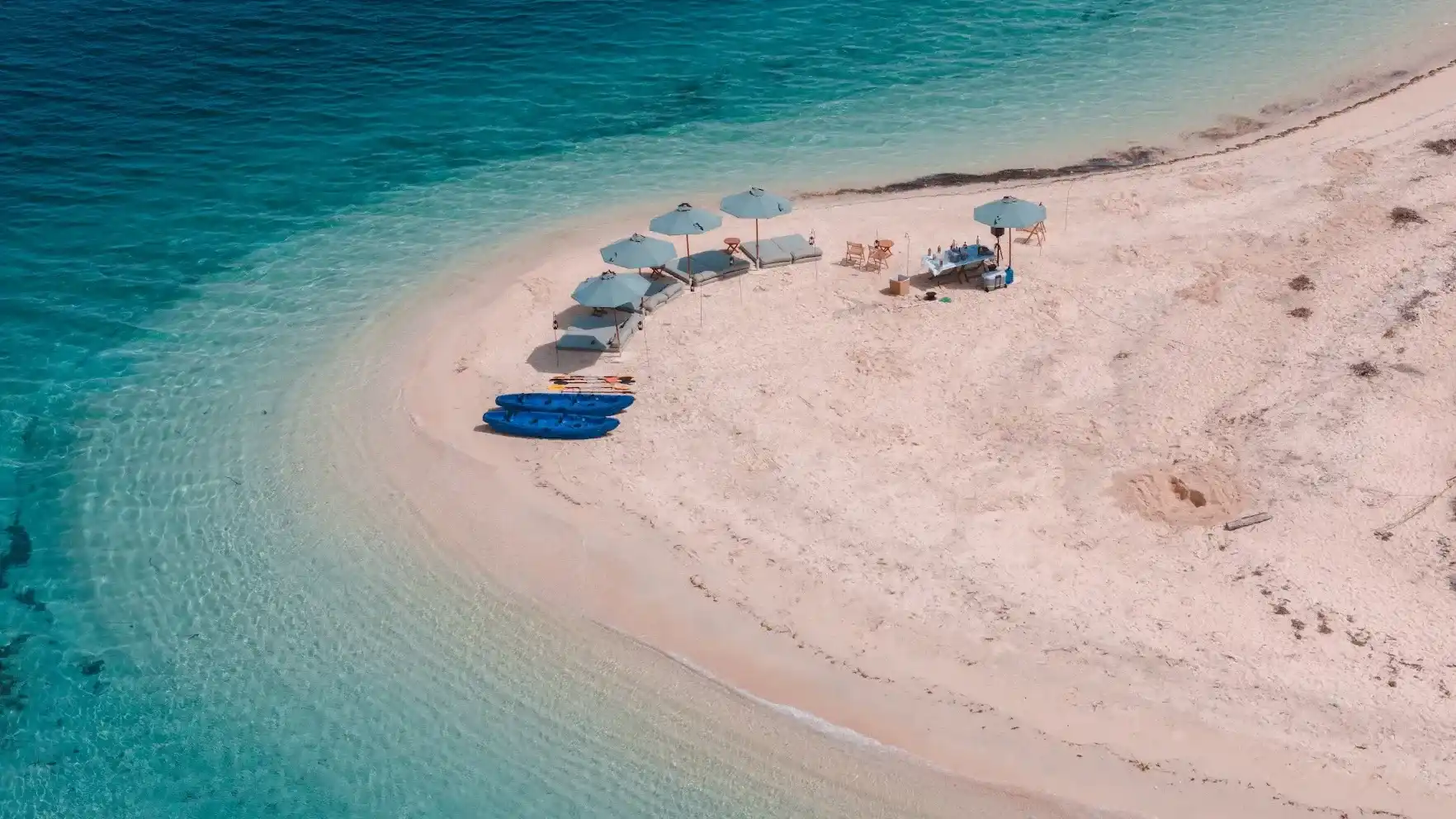
What Pink Beach actually looks like
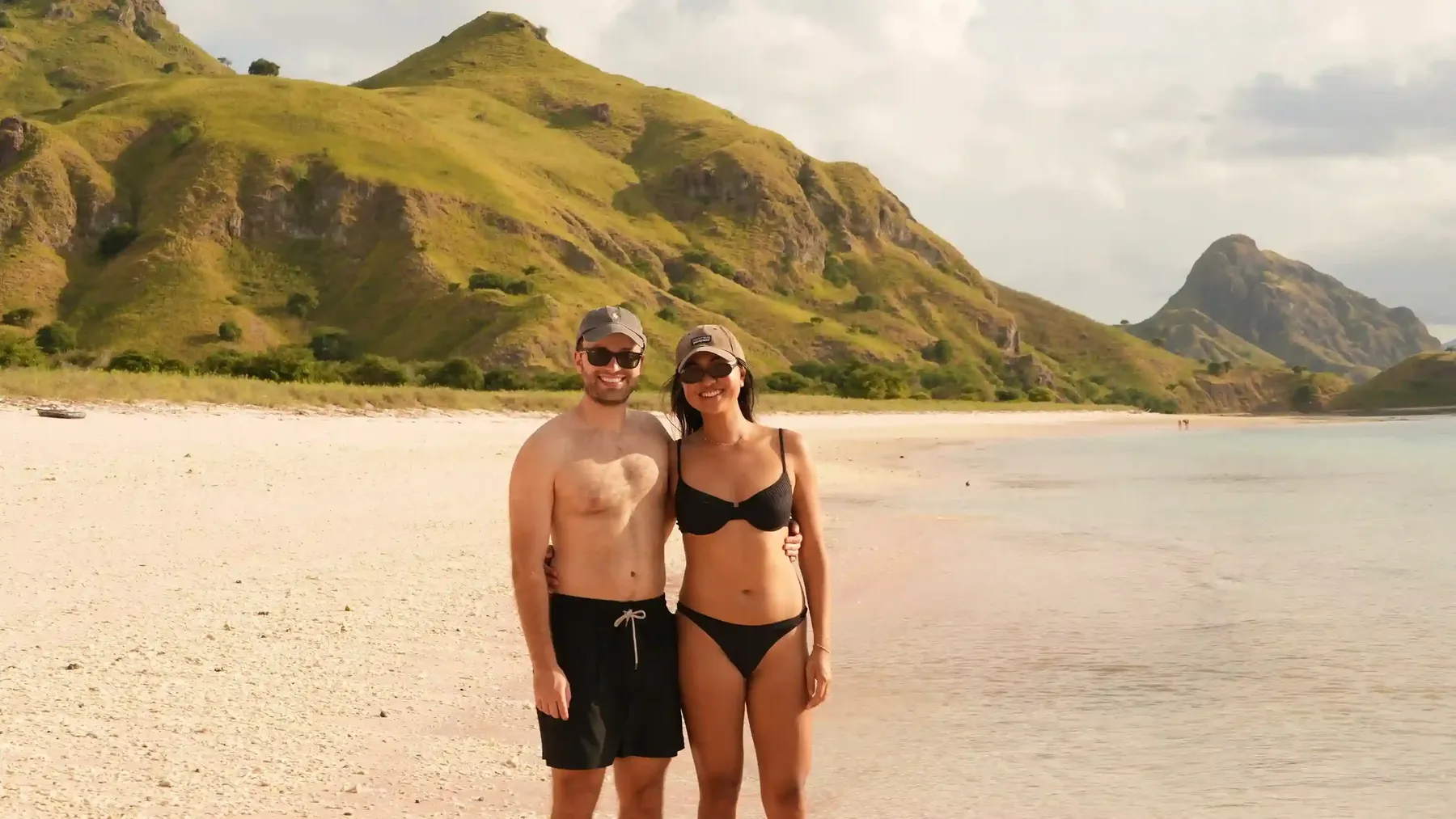
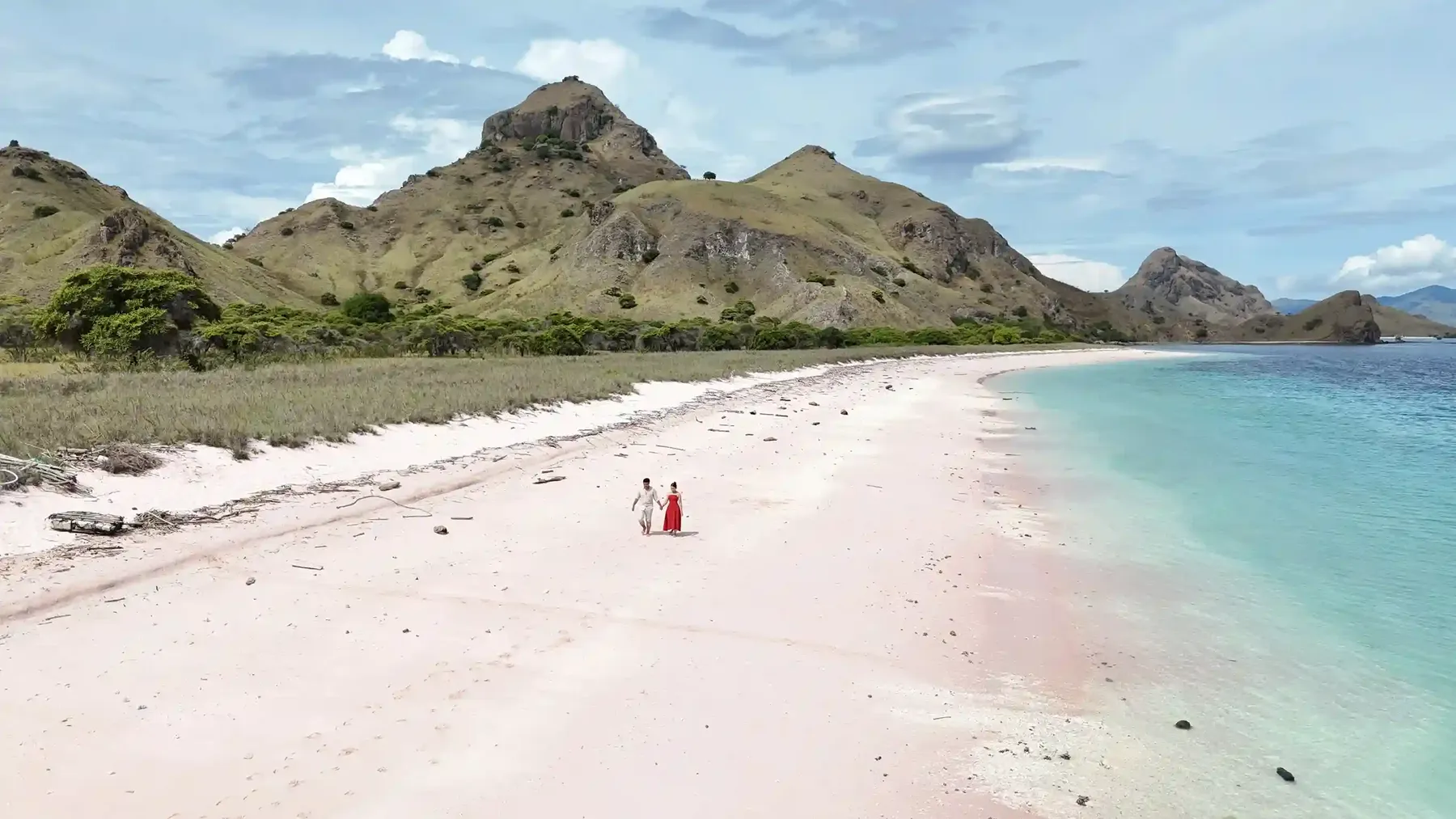
We are going to be blunt, because the gap between the photographs and the beach is the single most common disappointment in Komodo. Pink Beach is a white-sand beach with a genuine pink cast, created by broken fragments of red organ-pipe coral washed into the sand. On wet sand at the tideline in angled morning light it reads clearly pink. Ten metres up the beach in overhead midday sun it reads cream with a warm tint. Heavily saturated images are doing something your eyes will not do.
That is not an argument against going. It is an argument for going at the right hour, which is the one advantage a boat sleeping in the park has over a day trip out of Labuan Bajo. The 08:00–10:00 window gives you angled light, wet sand from the higher tide, and an empty beach.
| Stop | Best window | Depth | Current | Level | What you actually see |
|---|---|---|---|---|---|
| Pink Beach (shore) | 08:00–10:00 | — | — | All | Pale pink at the wet tideline, cream higher up; strongest colour on the first 2–3 m of sand |
| Pink Beach (snorkel) | 08:00–11:00 | 5–20 m | Light to moderate | All levels | Shallow hard-coral garden, anthias, turtles |
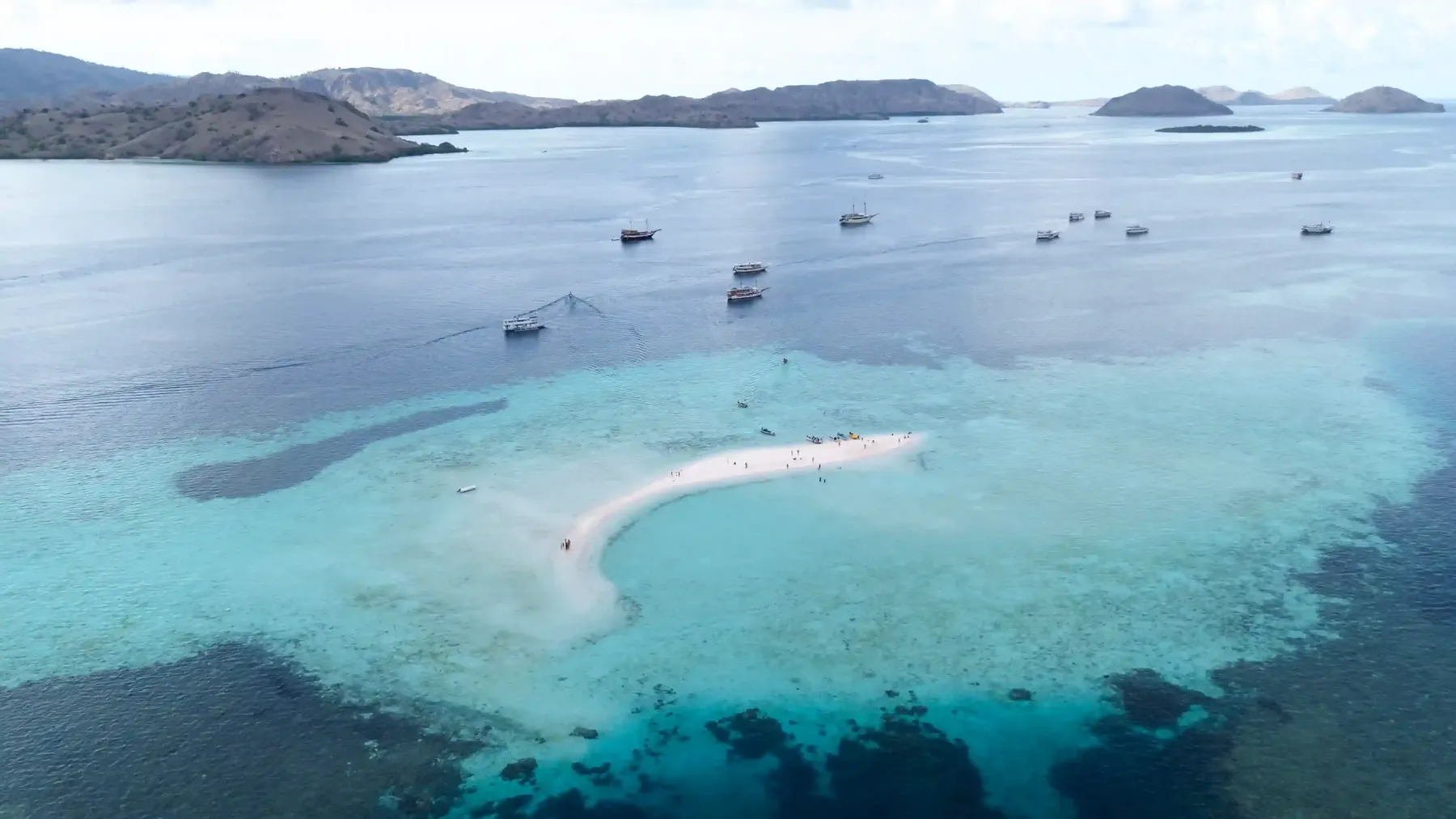
| Taka Makassar sandbar | Falling to low tide | — | — | All | Crescent sandbar; submerged or reduced at high water |
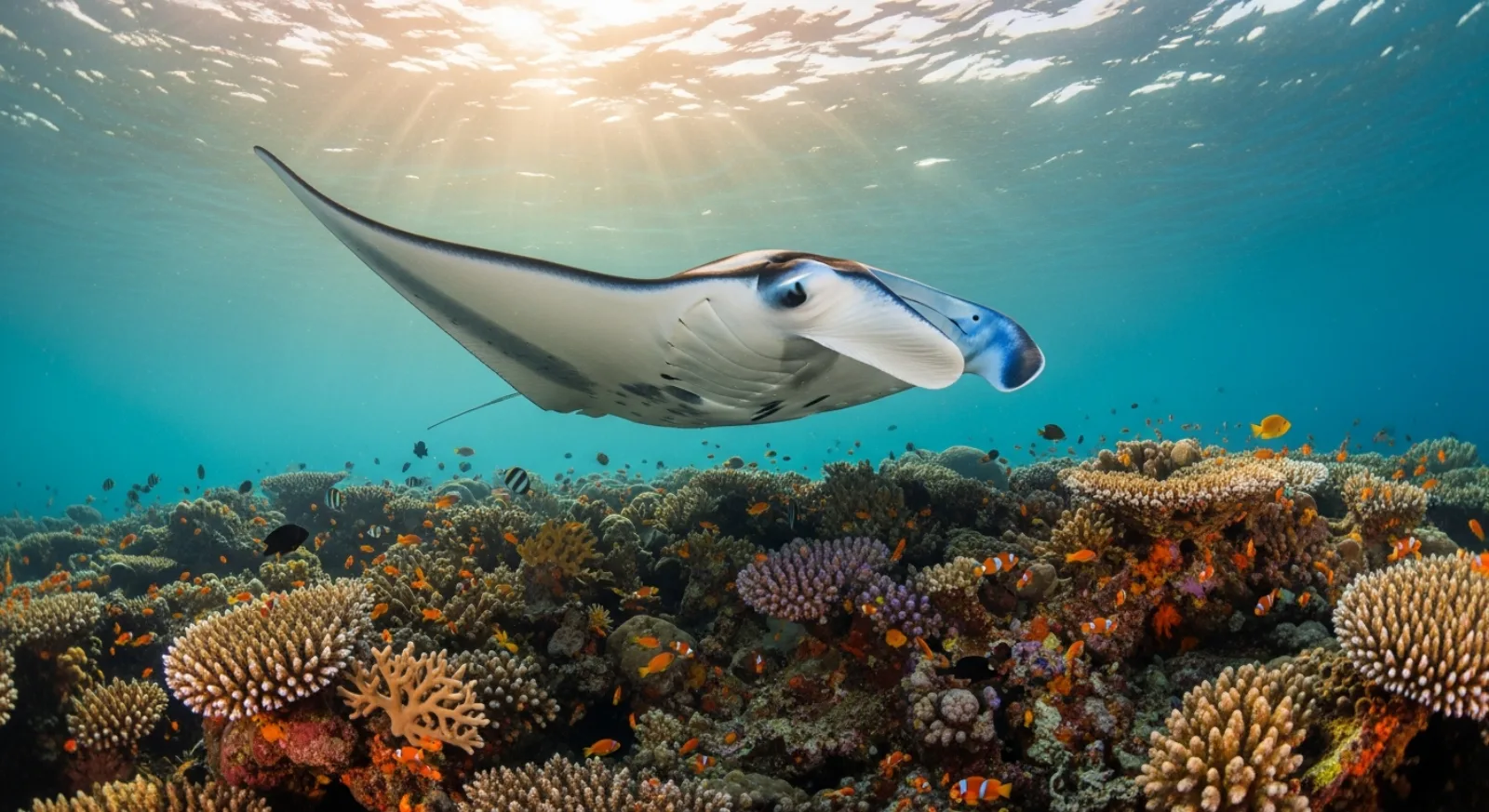
| Karang Makassar / Manta Point | Slack to gentle drift | 8–18 m | Gentle to moderate drift (2–3 of 5) | All levels, from about 10 logged dives for divers | Mantas year-round, eagle rays, bamboo sharks, cuttlefish |
The snorkelling is the better half of the stop
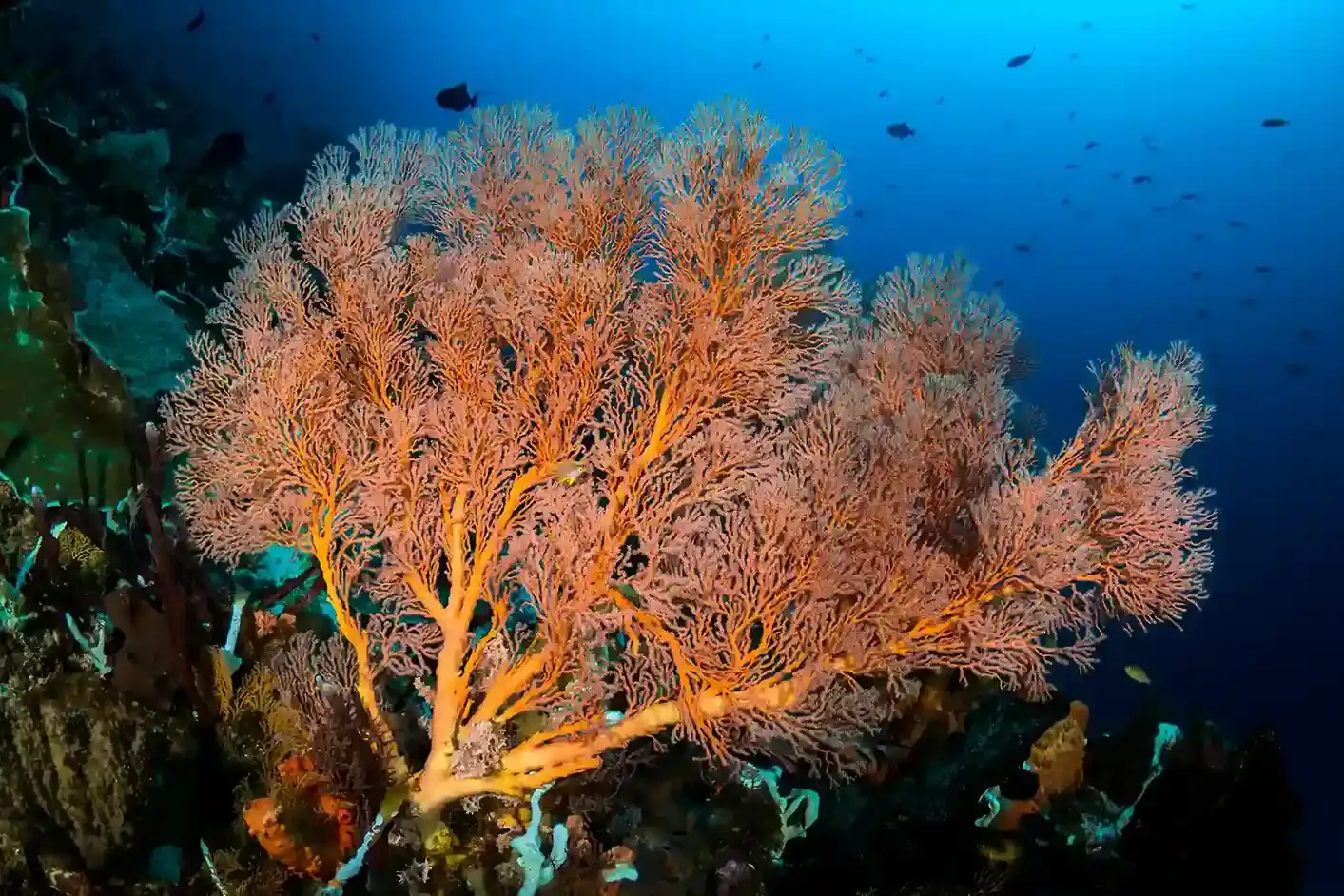
Most visitors photograph the sand and get back in the tender. The reef a few metres offshore is the stronger experience: a shallow hard-coral garden in 5–20 metres with light to moderate current, workable for complete beginners, with dense anthias over the coral heads and turtles seen regularly. It is one of the few sites in the park where a first-time snorkeller and an experienced diver both get something out of the same water.
Taka Makassar: a sandbar with an asterisk
Taka Makassar is a crescent of sand sitting in the middle of the Karang Makassar reef flat, roughly 20–30 minutes from Manta Point. There is nothing on it — no shade, no facilities, no vegetation. At the right state of tide it is a bright curve of sand in turquoise water and it is spectacular. At high water it can be reduced to a sliver or submerged entirely.
This is why we write it as a tidal stop rather than a guaranteed one. Crews check the tide table against the day’s route and, when the numbers do not work, they extend the Manta Point drift or add Siaba instead. A schedule that promises Taka Makassar regardless of tide is a schedule written by a marketing department rather than a captain.

Manta Point, and what “guaranteed mantas” really means
Karang Makassar is a cleaning-station drift in 8–18 metres with gentle to moderate current, and it holds reef mantas all year. Density peaks December to March, when plankton-rich monsoon water raises the food supply — the same months that most brochures call low season. If mantas are your priority, the “worst” months are the best months.
Nobody can guarantee a sighting. What an operator can do is control the variables that matter: arrive on a workable current, brief the group properly on staying above and behind the animals rather than swimming at them, and be willing to run a second pass. The park’s highest manta density is further south at Manta Alley, which is only reachable on longer itineraries and only when the southern swell allows.
Rubbish, crowds and the honest 2026 position
Marine debris washes onto the exposed corners of Pink Beach, most visibly during the monsoon months, and the beach can hold several day-boat groups at once from late morning in July and August. Komodo National Park covers roughly 1,817 km² and has been a UNESCO World Heritage site since 1991, with more than 1,000 reef fish species and more than 250 coral species recorded; it is also a working, heavily visited destination. Both things are true. Arriving early is the practical answer to both, and it is the schedule a boat sleeping at anchor gives you by default.
Best for
Best for: snorkellers who want an easy, colourful reef with a high chance of turtles; photographers who will be on the sand before 10:00; anyone chasing mantas between December and March. Manage expectations if: you are travelling specifically for a vivid pink beach, or you need a guaranteed sandbar landing on a fixed date. Broader Komodo itineraries and departure options across the network are collected at komodotrip.com.
Frequently asked questions
Is Pink Beach actually pink?
It is pale pink to salmon at the waterline and closer to cream further up the beach. The colour comes from fragments of red organ-pipe coral mixed into white sand. It reads strongest in flat morning light, on wet sand at the tideline, and it looks far less dramatic than most photographs suggest.
What time of day is Pink Beach best?
Mid-morning, roughly 08:00 to 10:00. The sand is still wet from the higher tide, the light is angled rather than overhead, and the day boats from Labuan Bajo have not yet arrived in numbers.
Is the snorkelling at Pink Beach any good?
Yes, and it is underrated compared to the sand. The reef starts a few metres out in 5-20 metres of water with light to moderate current, suitable for all levels. Expect a shallow hard-coral garden, anthias in numbers and regular turtle sightings.
What is Taka Makassar?
A crescent-shaped sandbar in the middle of the Karang Makassar reef flat that appears and disappears with the tide. There is no shade, no facilities and nothing on it – which is precisely the appeal. It sits about 20 to 30 minutes from Manta Point.
Can you always land on Taka Makassar?
No. It is a tidal feature. At high water it can be almost completely submerged, and on those days the boat swaps it for a longer stop at Manta Point or Siaba. Any operator promising a guaranteed Taka Makassar landing is not being straight with you.
Will I see mantas at Manta Point?
Karang Makassar, marketed as Manta Point, holds mantas year round in 8-18 metres with a gentle to moderate drift suitable for all levels. Density peaks December to March when the water is richest. Sightings are likely but never guaranteed – these are wild animals on a cleaning station, not an aquarium.
Is Pink Beach crowded or dirty?
It gets busy from late morning in July and August, when several day boats can be on the sand at once. Marine debris does wash up on the exposed corners, particularly in the monsoon. Arriving early, which is what a liveaboard schedule allows, avoids most of both problems.
Can I combine Pink Beach and Taka Makassar in one morning?
On paper yes, and the two sit close enough for it. In practice the boat usually splits them across days because the tide that gives you a good sandbar is rarely the tide that gives you good sand colour at Pink Beach.
Booking & enquiries
Pink Beach, Taka Makassar and Manta Point all sit on the standard 3D2N and 4D3N routes. Naturalia Cruise is operated and marketed by Komodo Luxury (part of Juara Holding Group, working in Labuan Bajo since 2015). Reservations, cabin availability and written quotations go through the Komodo Luxury reservations desk: WhatsApp +628113823875 or sales@komodoluxury.com. Payment terms are published and unchanged: 50% deposit to hold the date, balance due 30 days before departure, full payment if you book inside 30 days. The deposit is non-refundable on cancellation.
Where these numbers come from
Vessel dimensions, cabin layout, engine and generator data, charter tiers and cabin rates on this page are the figures published by the operator, Komodo Luxury, on its Naturalia charter listing. National park tariffs are taken from PP No. 36 Tahun 2024 as socialised by Balai Taman Nasional Komodo. Sunrise and sunset times are computed for Padar Island (8°39′S, 119°35′E) in WITA (UTC+8) and are accurate to about three minutes. Sailing times between anchorages are operational ranges, not fixed schedules — they move with tide, wind and ranger queues, and we write them as ranges for that reason. Rates are quoted for the 2027 season and were last reviewed on 1 August 2026; always confirm the current rate in writing before transferring a deposit.